Backgammon
Play now
Othello (also known as Reversi) is a two-player board game played on an 8x8 grid. This guide covers the rules, how the pieces move and how a game is won.
Othello is popular online because it's easy to learn but strategically deep.
The objective of Othello is to finish the game with more discs of your colour on the board than your opponent.
Players take turns placing discs. Any opponent discs trapped between your new disc and another disc of your colour are flipped to your colour. The player with the most discs when the game ends wins.
Othello is played on an 8×8 grid. Each square holds one disc — black on one side, white on the other.
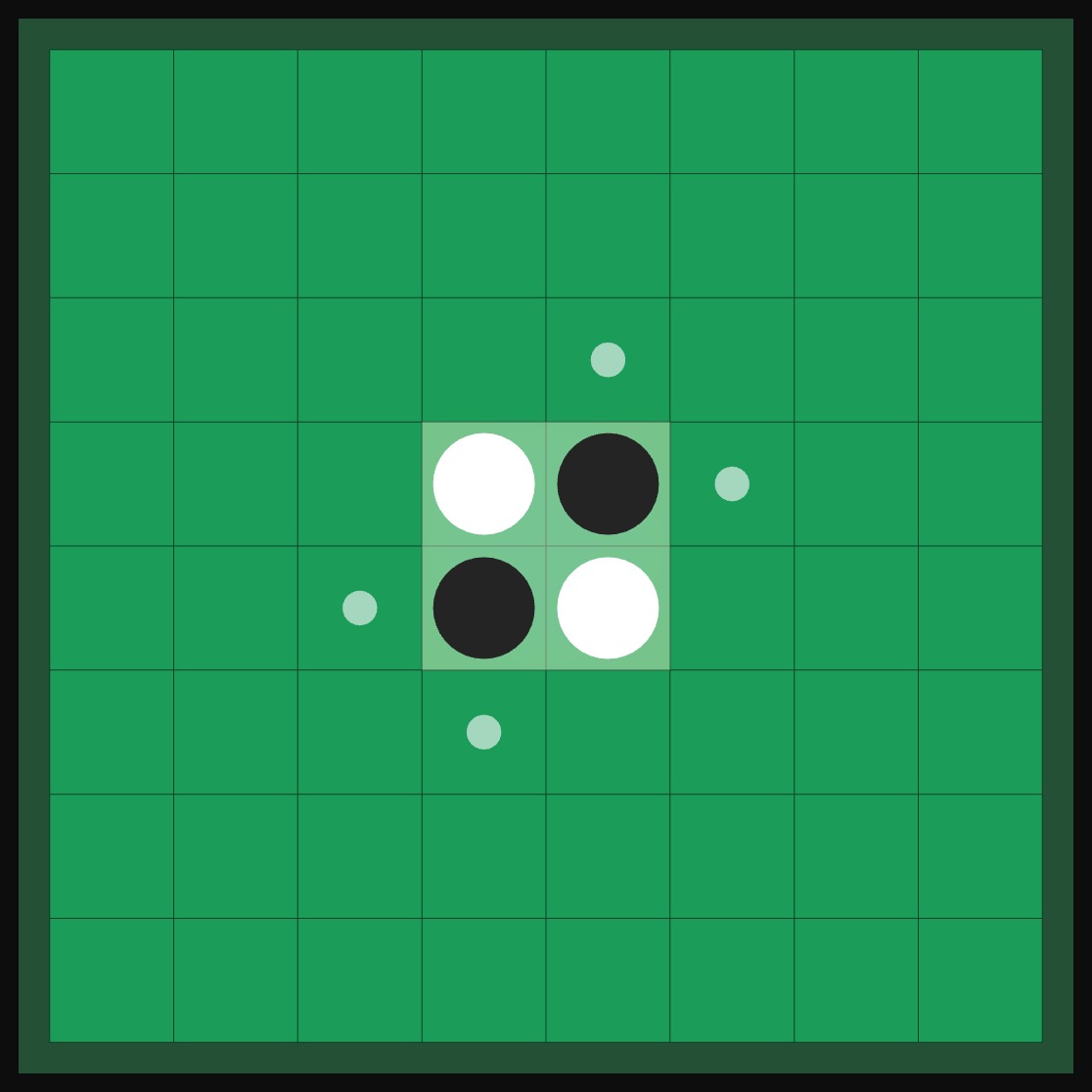
Every game starts the same way:
This fixed starting position gives both players exactly the same opening conditions. Black has four legal moves available from the start.
On your turn, place a disc on any empty square that traps at least one opponent disc in a straight line — horizontal, vertical, or diagonal.
A disc is trapped when it sits between the disc you just placed and another disc already on the board that is your colour. Every trapped disc flips immediately to your colour.
A move is only legal if it flips at least one opponent disc. If a square would flip nothing, you cannot play there.
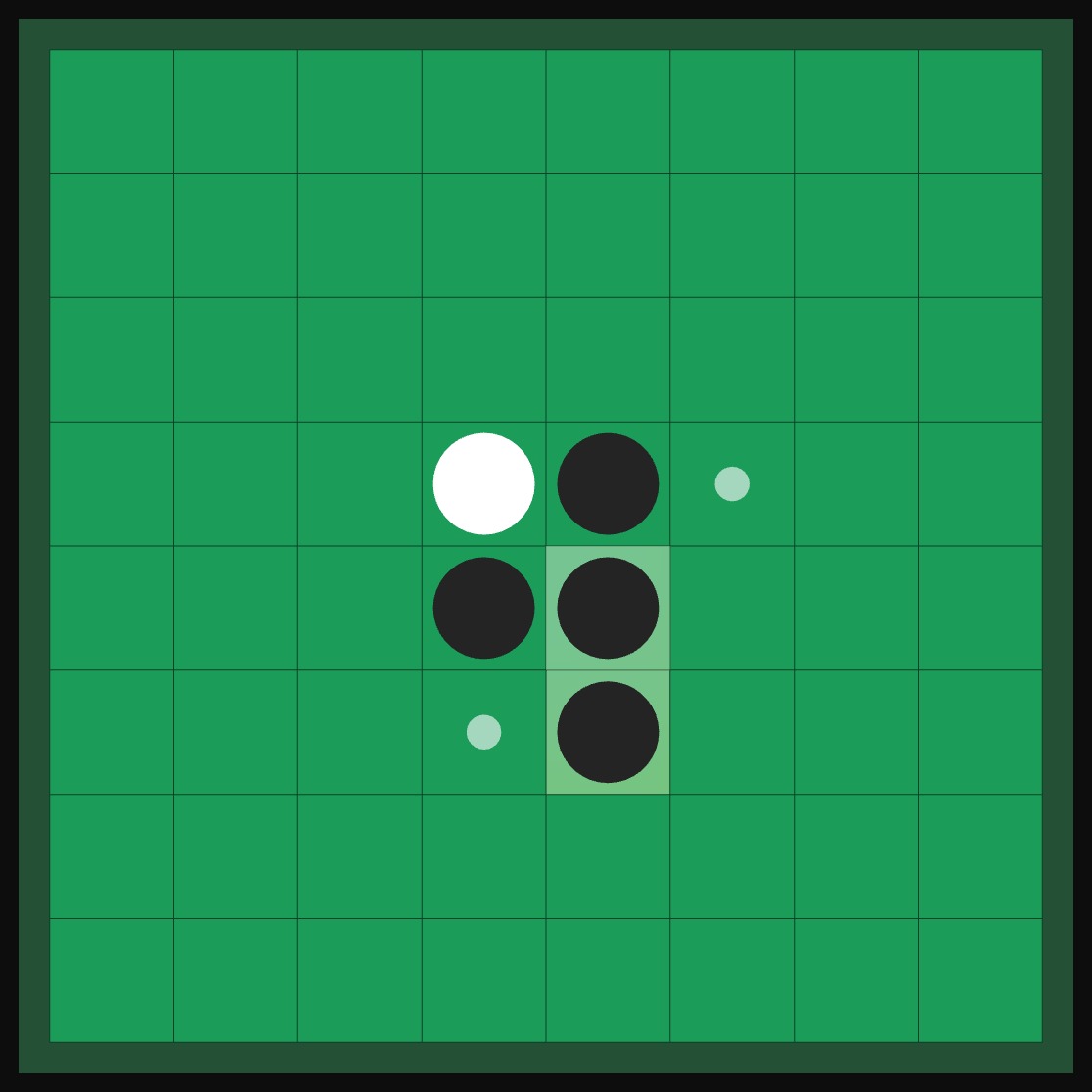
Black places on D3. The White disc on D4 is now sandwiched vertically between D3 and D5 — it flips to Black.
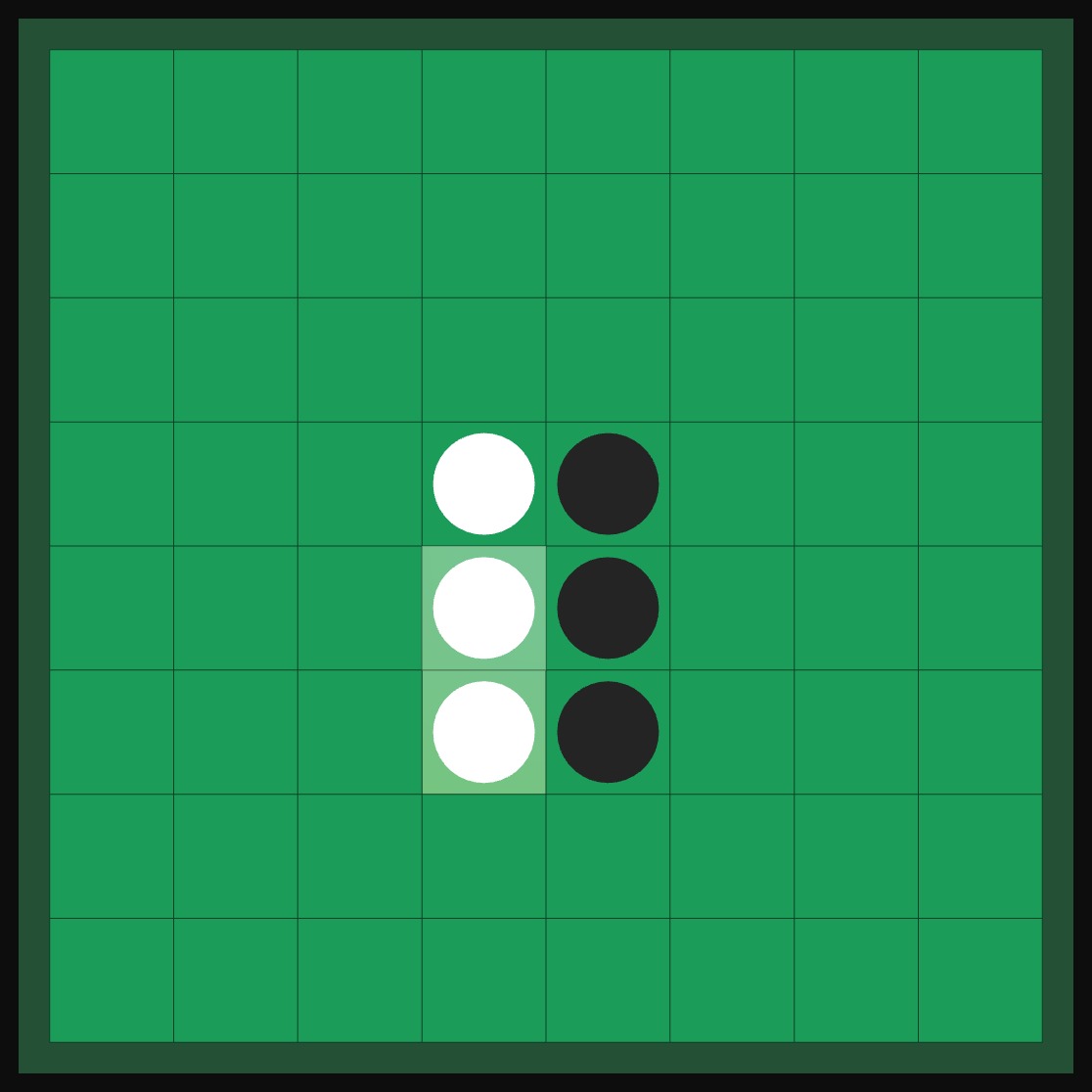
White places on C3. The Black disc on D4 is sandwiched diagonally and flips to White. Discs can flip back and forth throughout the game.
If you have no legal moves on your turn, you must pass. Your opponent then continues playing.
This can happen at any point in the game — not just near the end. It is not a penalty; it simply means no legal square exists for you at that moment.
If neither player has a legal move, the game ends immediately regardless of how many empty squares remain.
Corners are king. A disc in a corner can never be flipped. Securing corners early gives you a stable anchor from which to build.
Avoid the squares next to corners. Playing on a square adjacent to an empty corner hands your opponent a path to that corner on their next turn.
Disc count early on is misleading. Having more discs in the opening is often a disadvantage — it means your opponent has more pieces to flip back. Focus on mobility (the number of legal moves you have) rather than the disc count.
Limit your opponent's options. The fewer moves your opponent has, the more you control the tempo of the game.
Edges are stable too. Discs along the edge of the board are harder to flip because they can only be attacked from a limited number of directions.
The game ends when:
Count the discs on the board. The player with the most discs of their colour wins. If the counts are equal, the game is a draw.