Backgammon
Play now
Chess is a two-player strategy board game played on an 8×8 grid. This guide covers the rules, how the pieces move and how a game is won.
Chess is one of the most popular games in the world because it is easy to learn, deeply strategic, and rewarding at every skill level.
The objective of chess is to checkmate your opponent's king. Checkmate means the king is in check (under attack) and there is no legal move that removes the check.
You can also draw a chess game in several ways (for example stalemate), which is covered later in this guide.
Chess is played on an 8×8 board with 64 squares. Squares are usually identified by a letter (file) and number (rank):
Example squares: E2, A1, H8.
Each player starts with 16 pieces:
White pieces begin on ranks 1–2. Black pieces begin on ranks 7–8. White moves first.
Players alternate turns. On your turn you:
A move is legal only if it follows the piece's movement rules and does not leave your king in check.
Capturing is generally done by moving onto a square occupied by an opponent piece (except for special pawn rules).
Each diagram below shows a single piece on a mostly empty board to make its movement pattern clear. In a real game, other pieces may block the path (except for knights, which jump).
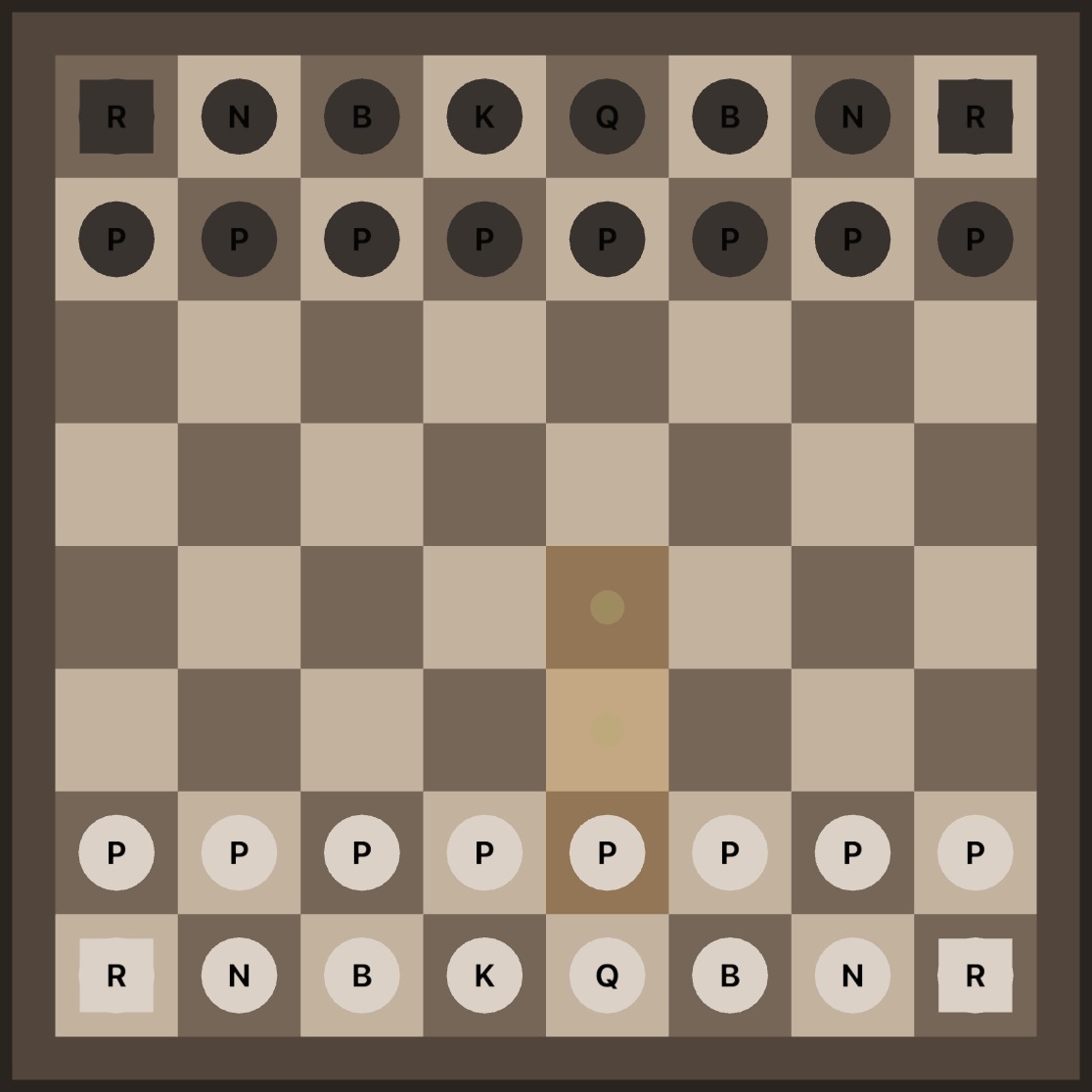
Pawns move forward (toward the opponent's side).
The green dots show where this pawn can move on its first turn.
Knights move in an "L" shape:
The knight can reach up to 8 squares from the centre of the board.
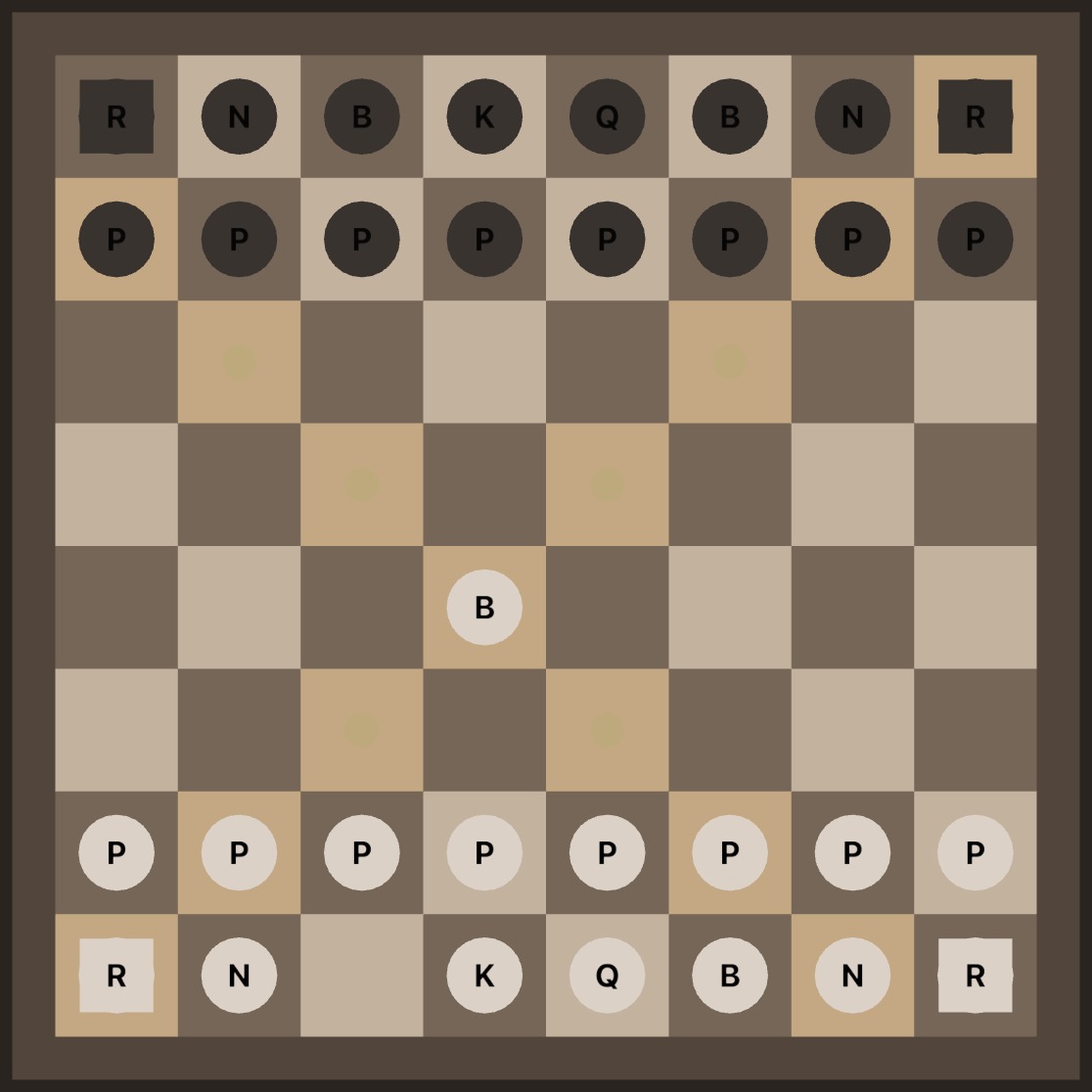
Bishops move diagonally any number of squares. A bishop stays on its starting square colour for the whole game and cannot jump over pieces.
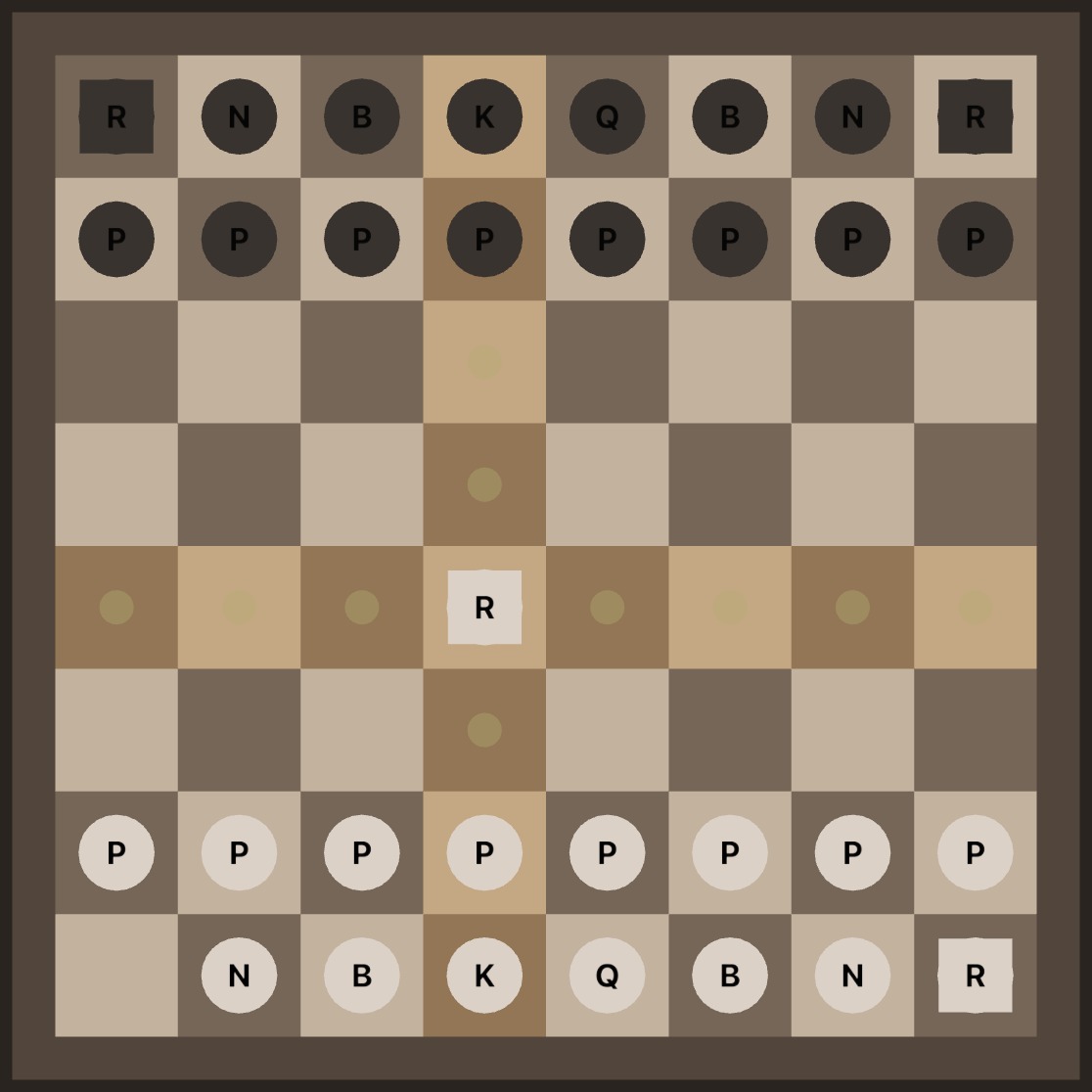
Rooks move horizontally or vertically any number of squares. Like the bishop, a rook cannot jump over pieces.
The queen combines rook and bishop movement — it can move any number of squares horizontally, vertically, or diagonally (but cannot jump).
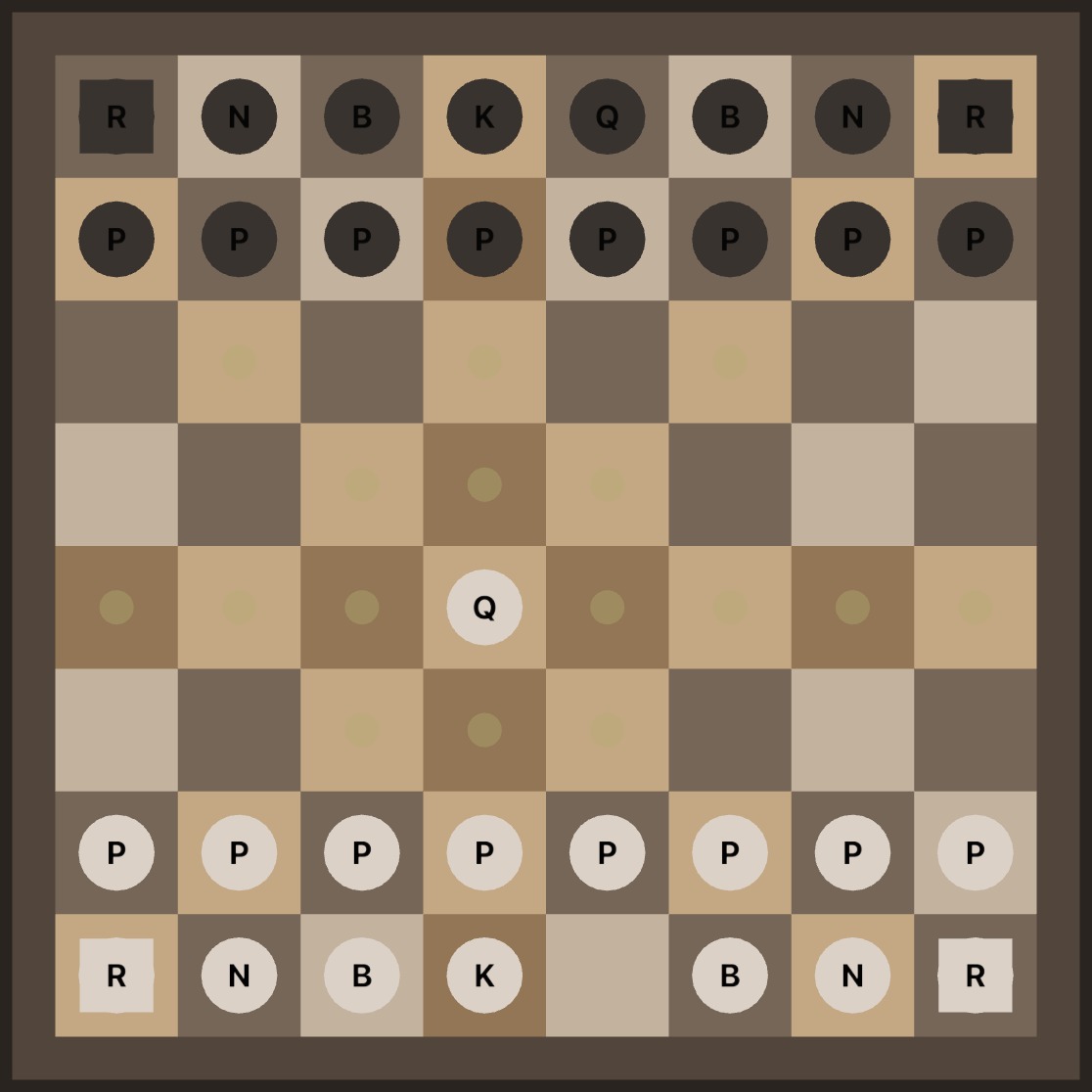
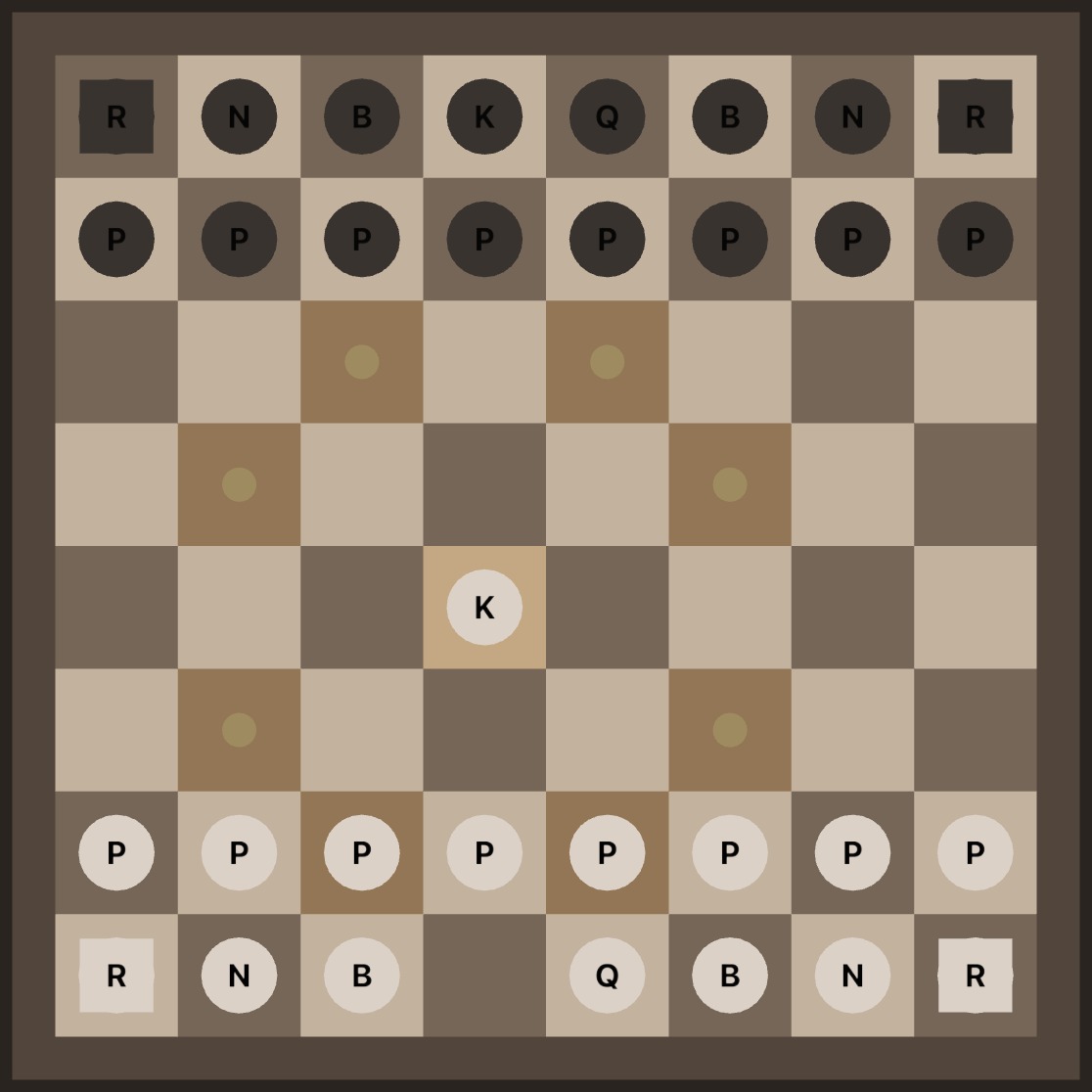
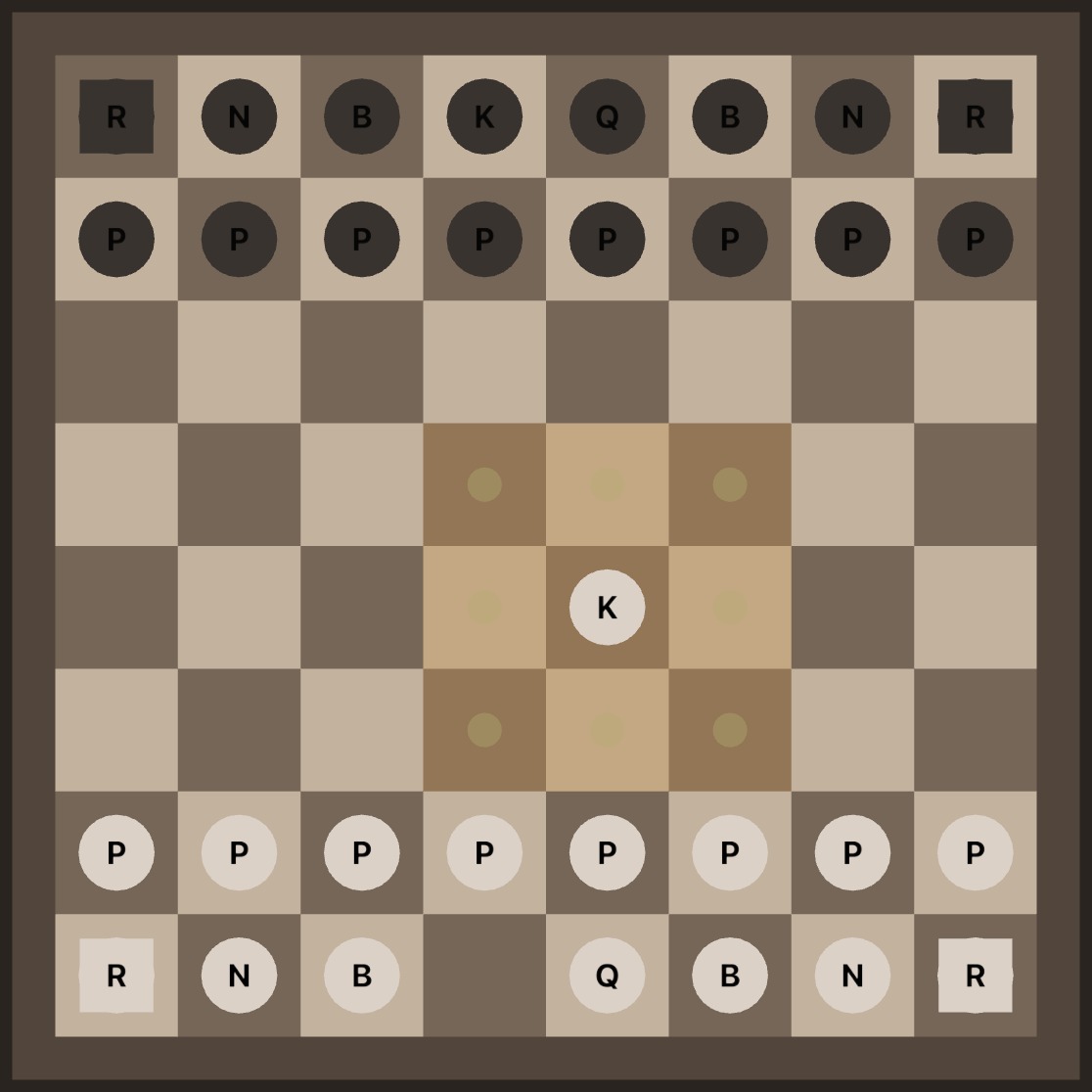
The king moves 1 square in any direction — horizontally, vertically, or diagonally. The king cannot move to a square that is attacked by an opponent piece.
If it is your turn but you have no legal moves and your king is not in check, the game is a stalemate — a draw. Neither player wins.
Castling is a special move that lets you tuck your king into a safe corner and activate your rook in a single turn. It is the only move in chess where two pieces move at once.
How it works: the king slides two squares toward a rook, and that rook jumps over the king to land on the other side.
Castling is only allowed when:
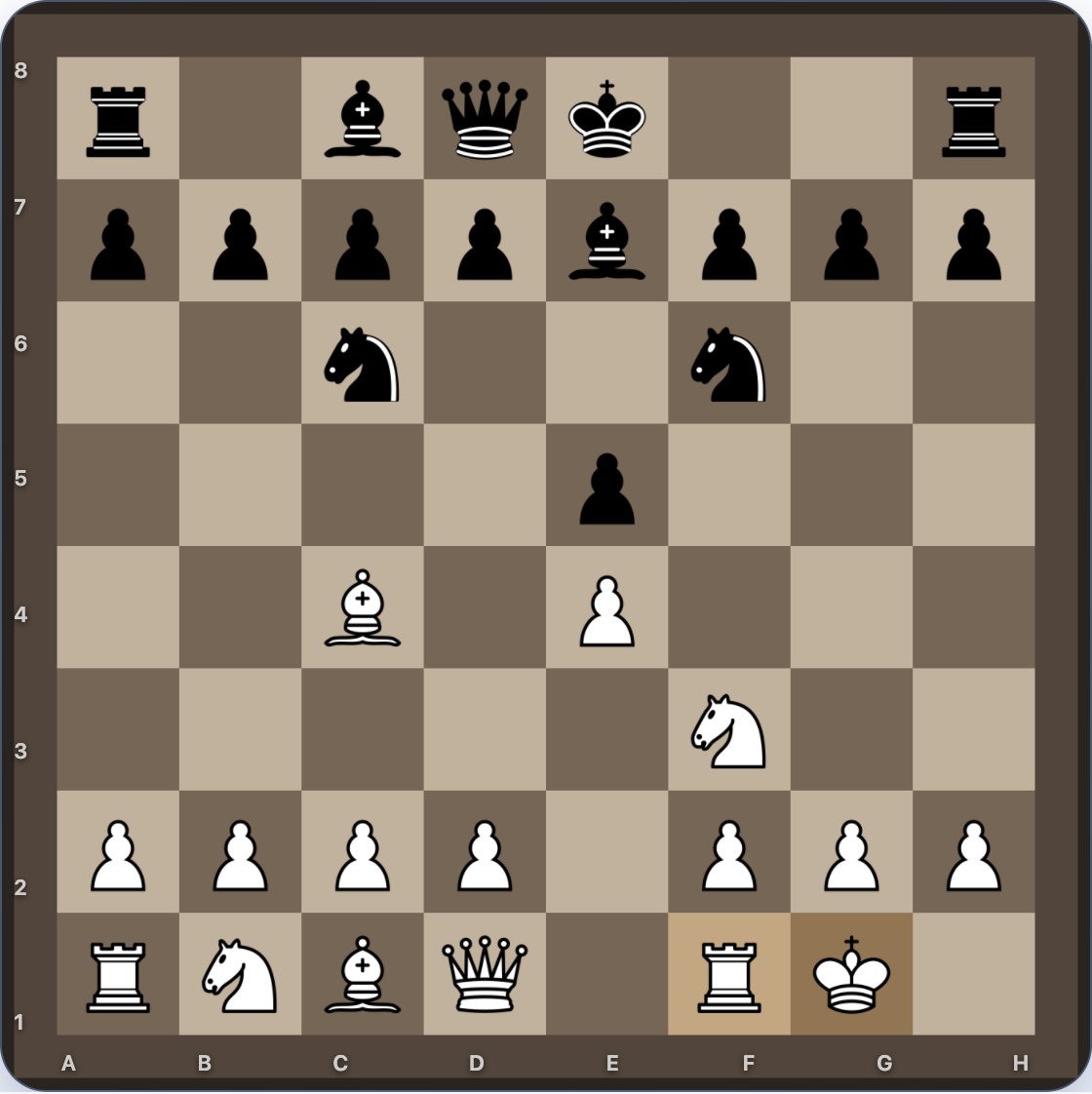
The squares between the White king on E1 and the rook on H1 are empty, so castling is available. The green dot on G1 shows where the king will land.
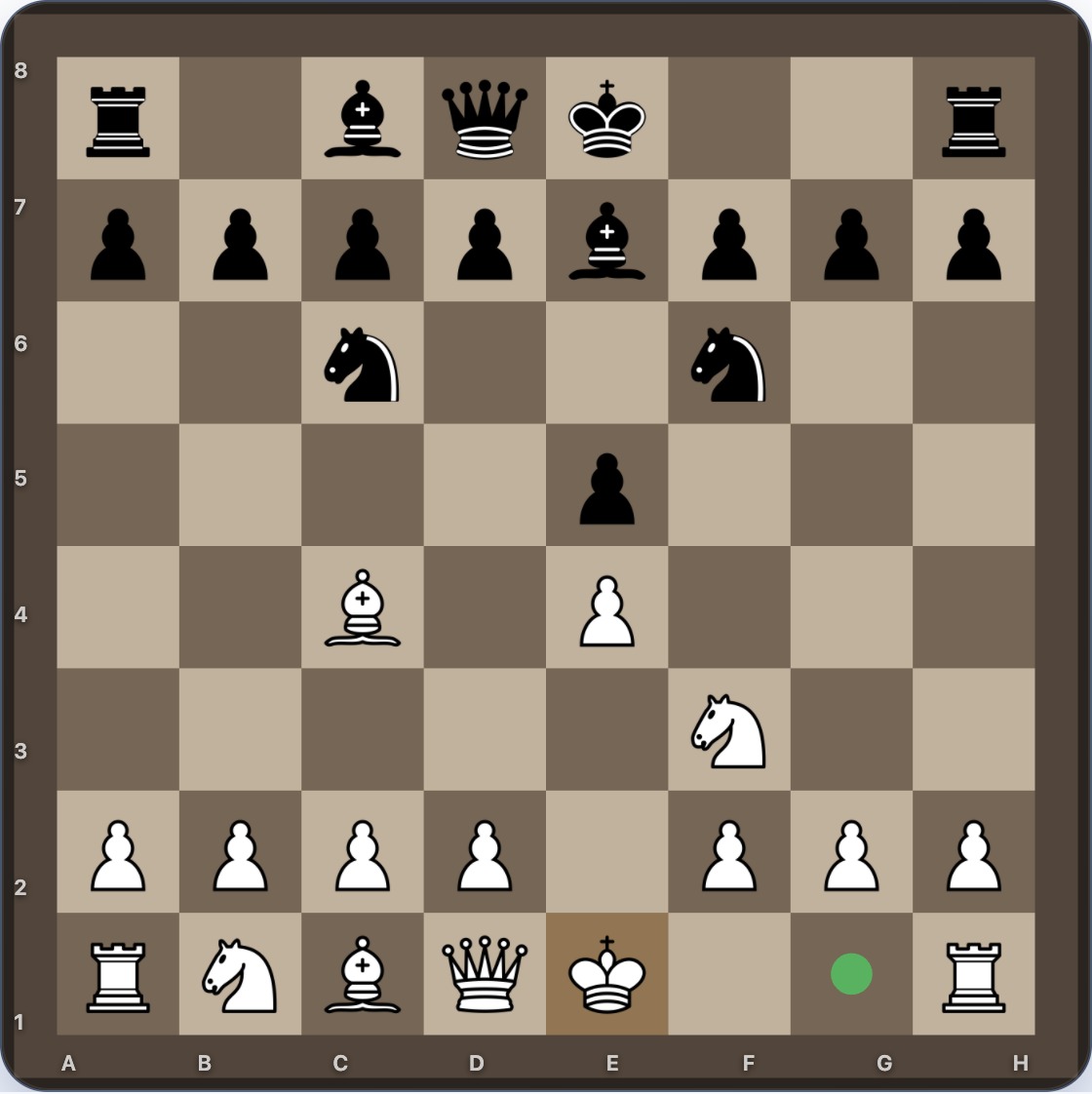
The king is now safely on G1 behind its pawns, and the rook has moved to F1 where it can join the action along the centre files.
When a pawn reaches the far end of the board (the 8th rank for White, the 1st rank for Black), it must be promoted — replaced by a queen, rook, bishop, or knight of the same colour. Most players choose a queen because it is the most powerful piece.
En passant ("in passing") is a special pawn capture rule. It only applies in one specific situation:
If you do not capture en passant immediately, the opportunity is gone.
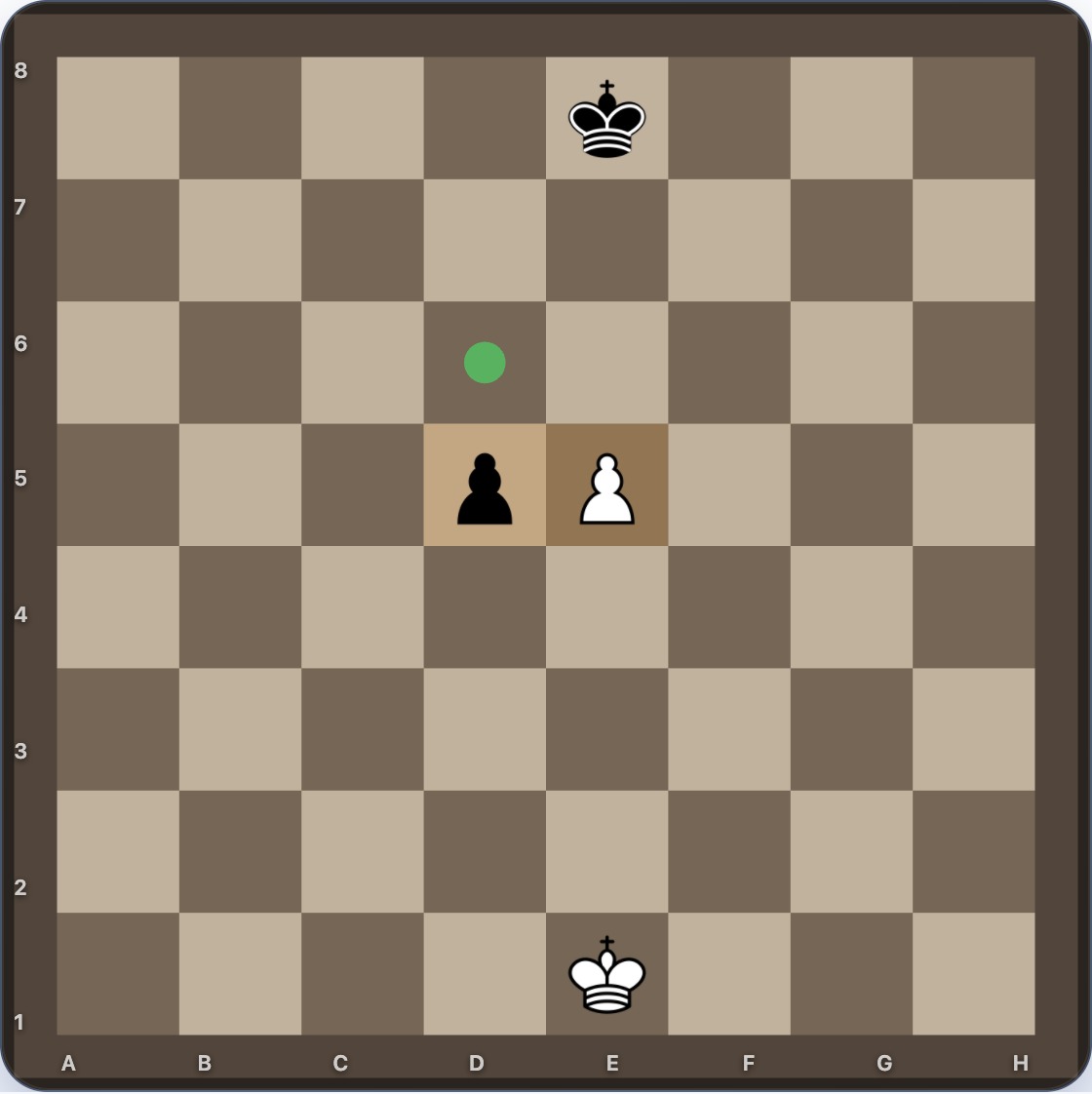
White's pawn on E5 can capture the Black pawn that just advanced from D7 to D5. The green dot on D6 is the capture square — even though no piece is standing there.
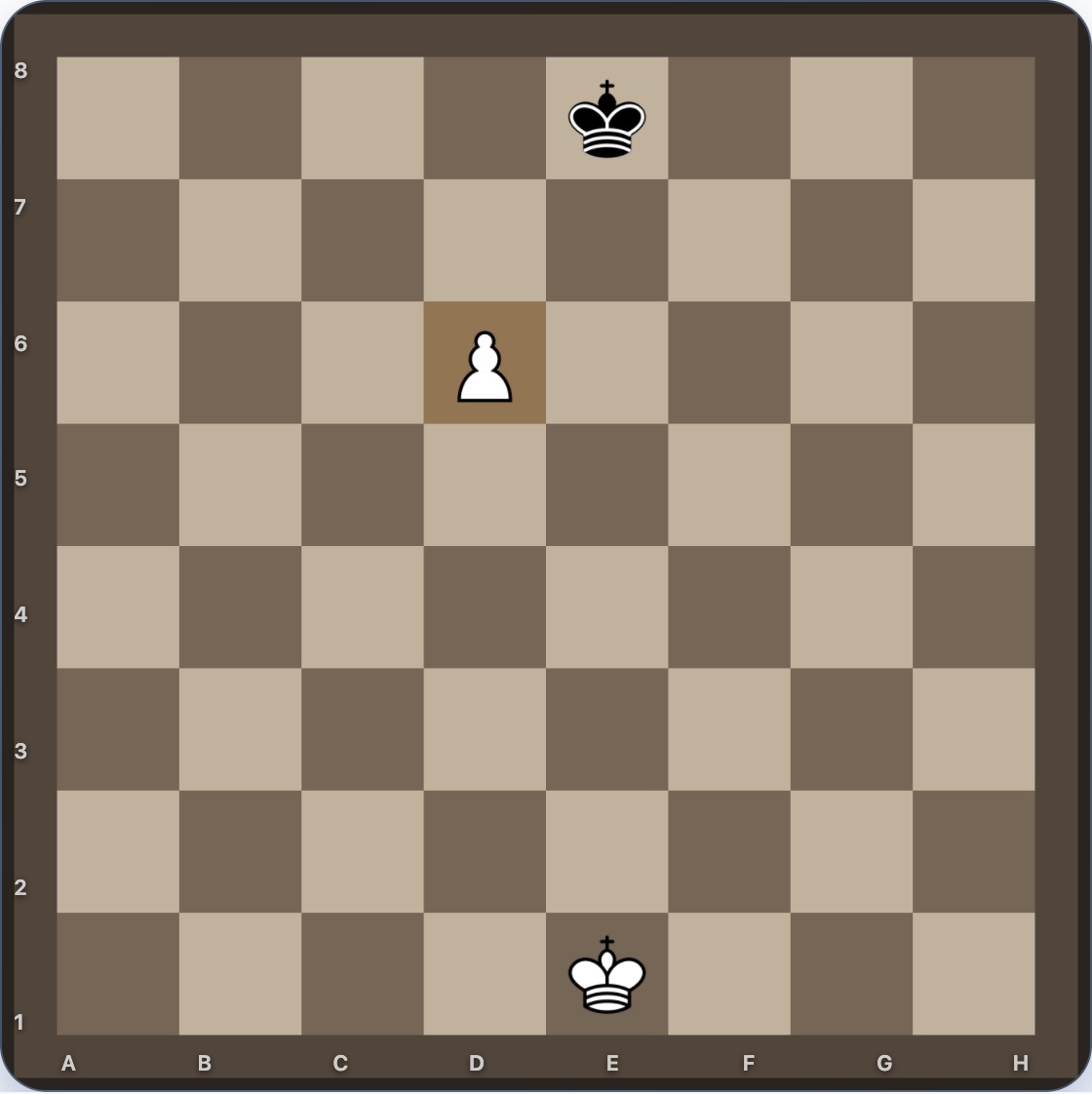
White moved the E5 pawn diagonally to D6 and removed the Black D5 pawn from the board.
No. Any move that leaves your king in check is illegal.
Only the knight can jump over pieces. All other pieces require a clear path.
Most captures happen by moving onto an enemy-occupied square. Pawns capture diagonally forward rather than straight ahead.
Chess is about controlling space, developing your pieces, and protecting your king while creating threats against your opponent. Start by learning how each piece moves, then focus on basic principles: develop your knights and bishops, control the center, and keep your king safe.