Chess
Play now
Tic-Tac-Toe is the classic two-player game of X and O: take turns marking squares on a 3×3 grid, and the first player to get three in a row — across, down or diagonally — wins. A match is over in a minute or two, but there's real strategy in it: set up forks to win, and spot your opponent's before they land. Play solo against the bot, or online through quick match or a playroom with a friend, without signing up.
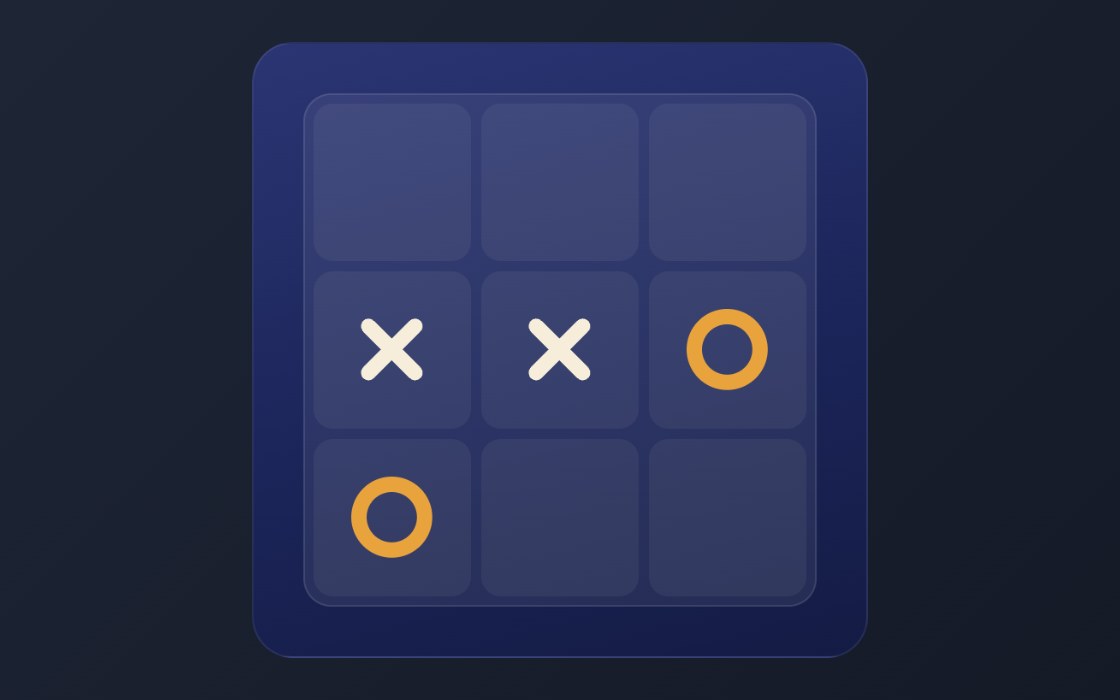
Be the first player to get three of your marks in a row — across a row, down a column or along a diagonal.
One player is X and the other is O. You take turns placing one mark at a time, and the match ends the moment someone completes a line. If all nine squares fill up with no line of three, the match is a draw.
Draws are common. With perfect play from both sides, every match of Tic-Tac-Toe ends in a draw, so winning comes down to setting traps and not falling into your opponent's.
Tic-Tac-Toe is played on a 3×3 grid of nine squares. One player places X marks and the other places O marks, and X always moves first. In a solo match you choose your side, so pick X if you want to start; in online matches the sides are assigned for you.
Every match starts on an empty board, with X to move.

The nine squares come in three kinds. The more winning lines pass through a square, the more useful it tends to be:
There are eight winning lines in all: three rows, three columns and two diagonals.
On your turn, click or tap any empty square to place your mark there. Then it's your opponent's turn.
X places a mark in the bottom-right corner, and then it's O's turn.

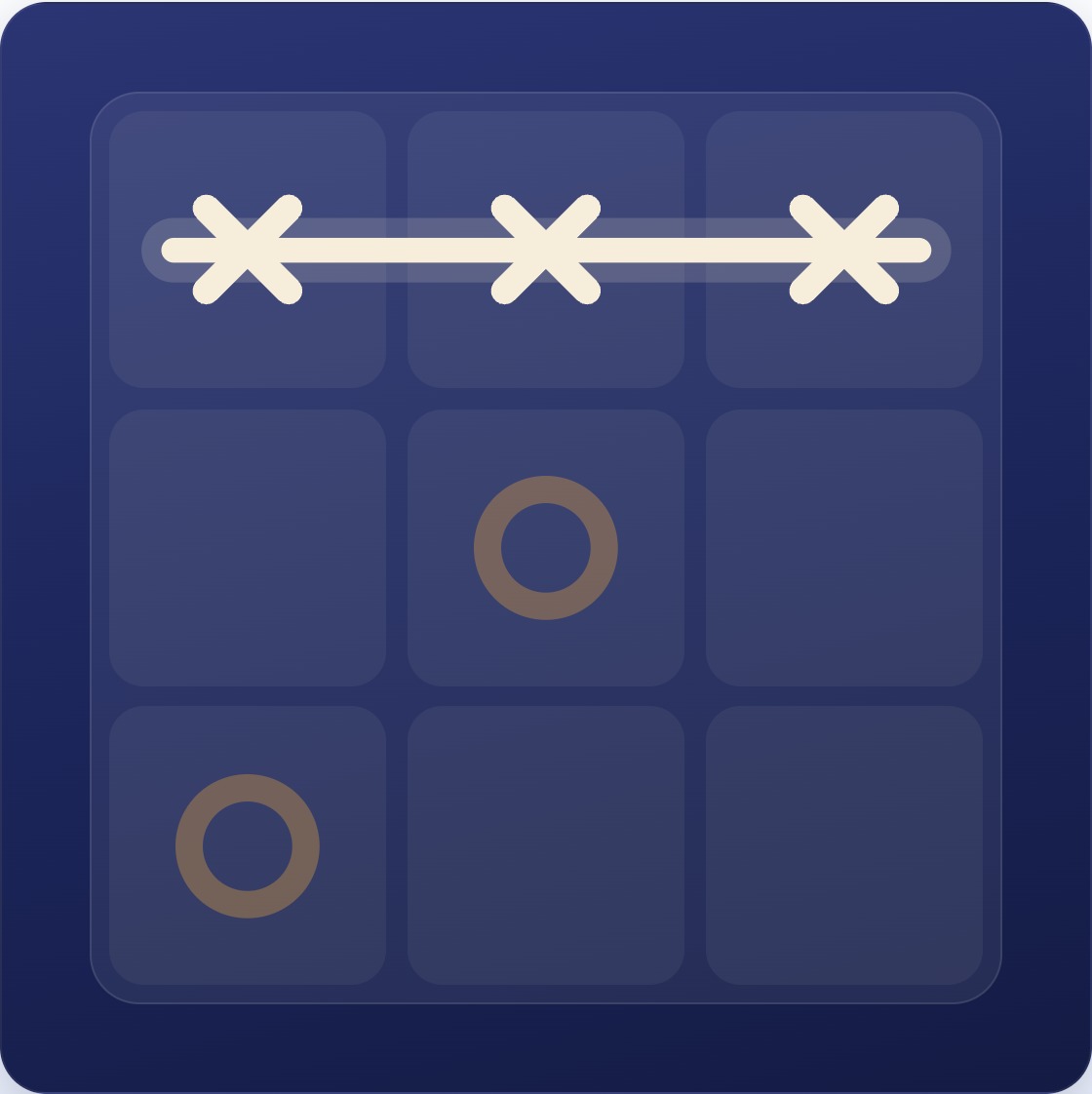
The match ends the moment a player completes a line of three of their own marks — across a row, down a column or along either diagonal. No more marks can be placed after that.
X completes the top row and wins the match.
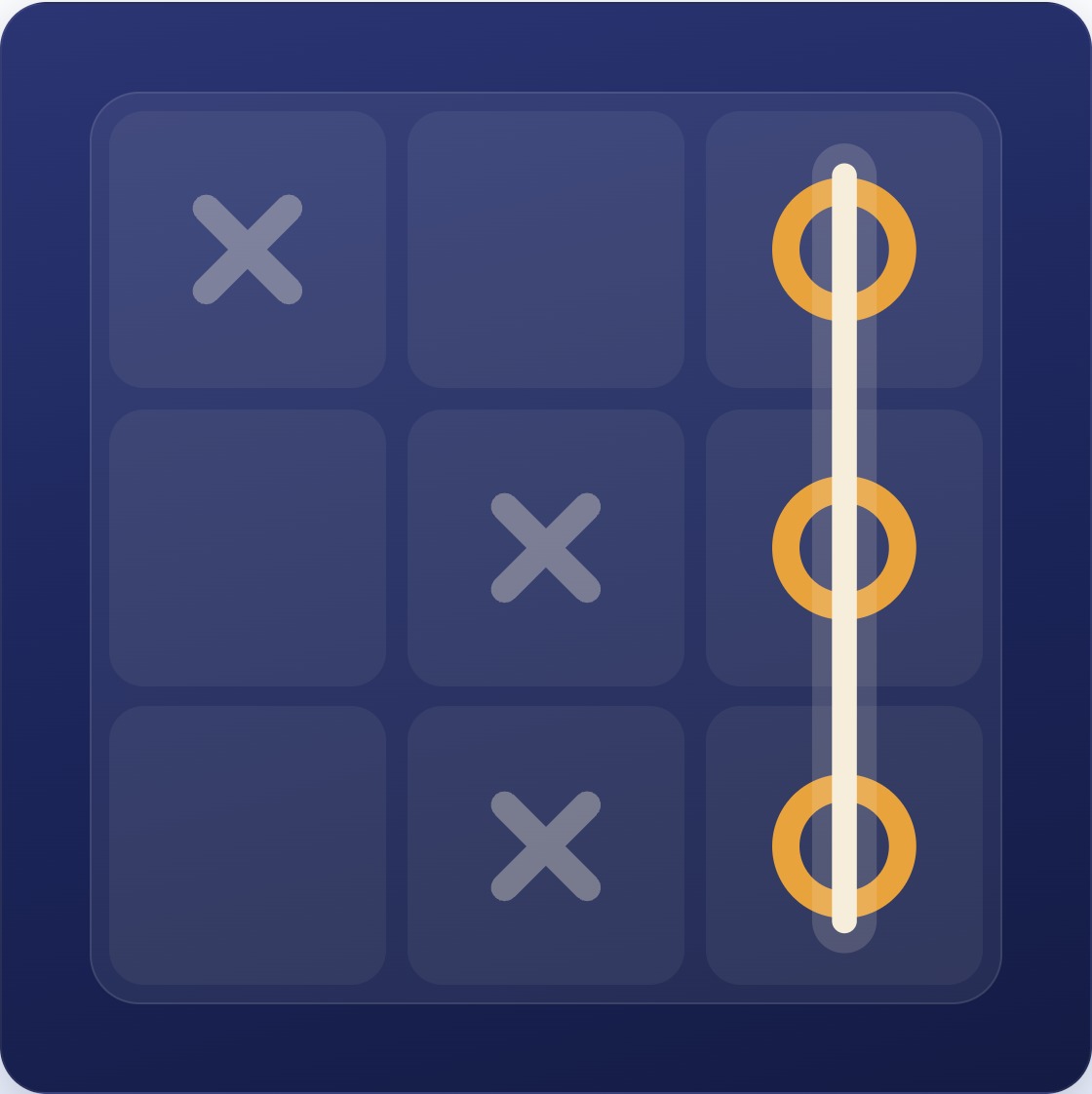
O completes the right-hand column and wins, even though X also had two in a row — always take your own win before blocking.
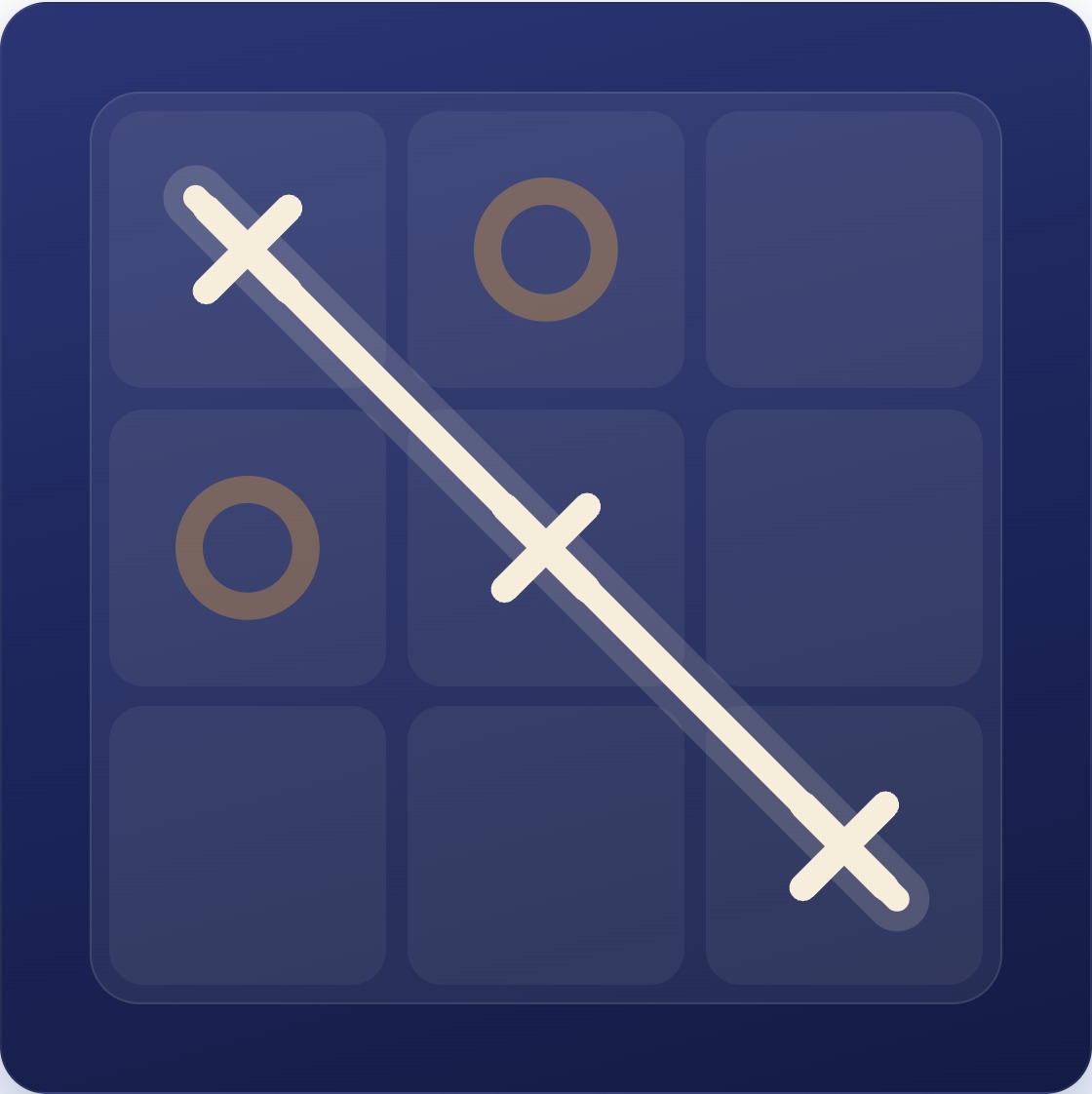
Both diagonals count, and both run through the centre.
X completes the diagonal from the top-left corner to the bottom-right corner and wins.
If all nine squares are filled and nobody has three in a row, the match is a draw. X always places the ninth and last mark, so if that mark completes a line, X wins instead.
The board is full and there is no line of three anywhere, so this match is a draw.

Perfect play always ends in a draw, so the opening isn't about winning outright. As X, it's about giving your opponent chances to go wrong; as O, it's about not taking the bait.
O's first move decides whether O can hold the draw:
X has opened in the centre, so O should answer in one of the four ringed corners.

A threat is two of your marks in a line with the third square still empty. Almost every decision in Tic-Tac-Toe is about threats: making them, blocking them and doubling them up.
Go through this list in order and play the first move that fits:
A block stops your opponent's line, and the best blocks start a line of your own at the same time.
X threatens to complete the diagonal through the centre, so O blocks in the bottom-left corner — which also gives O a threat down the left column.
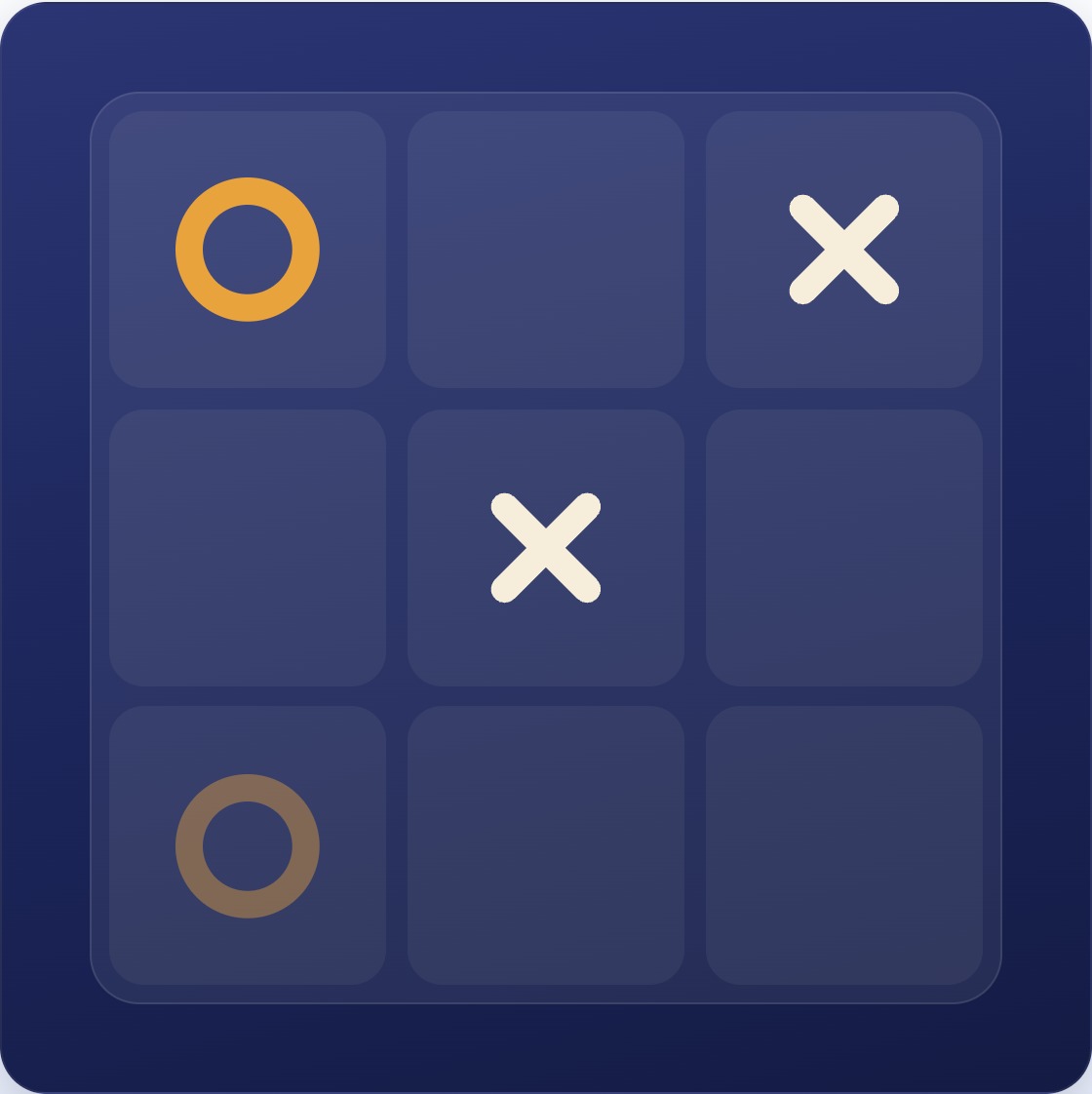
A fork is a move that creates two threats at once. Your opponent can block only one of them, so you complete the other on your next turn. Against an opponent who always blocks, a fork is the only way to win.
Forks are built with forcing moves: make a threat, let your opponent block where you want them to, then make two threats with your next move. Here is how X punishes O for answering a corner opening on an edge:
X now has two threats, at the ringed squares. O can block only one, so X wins next turn.
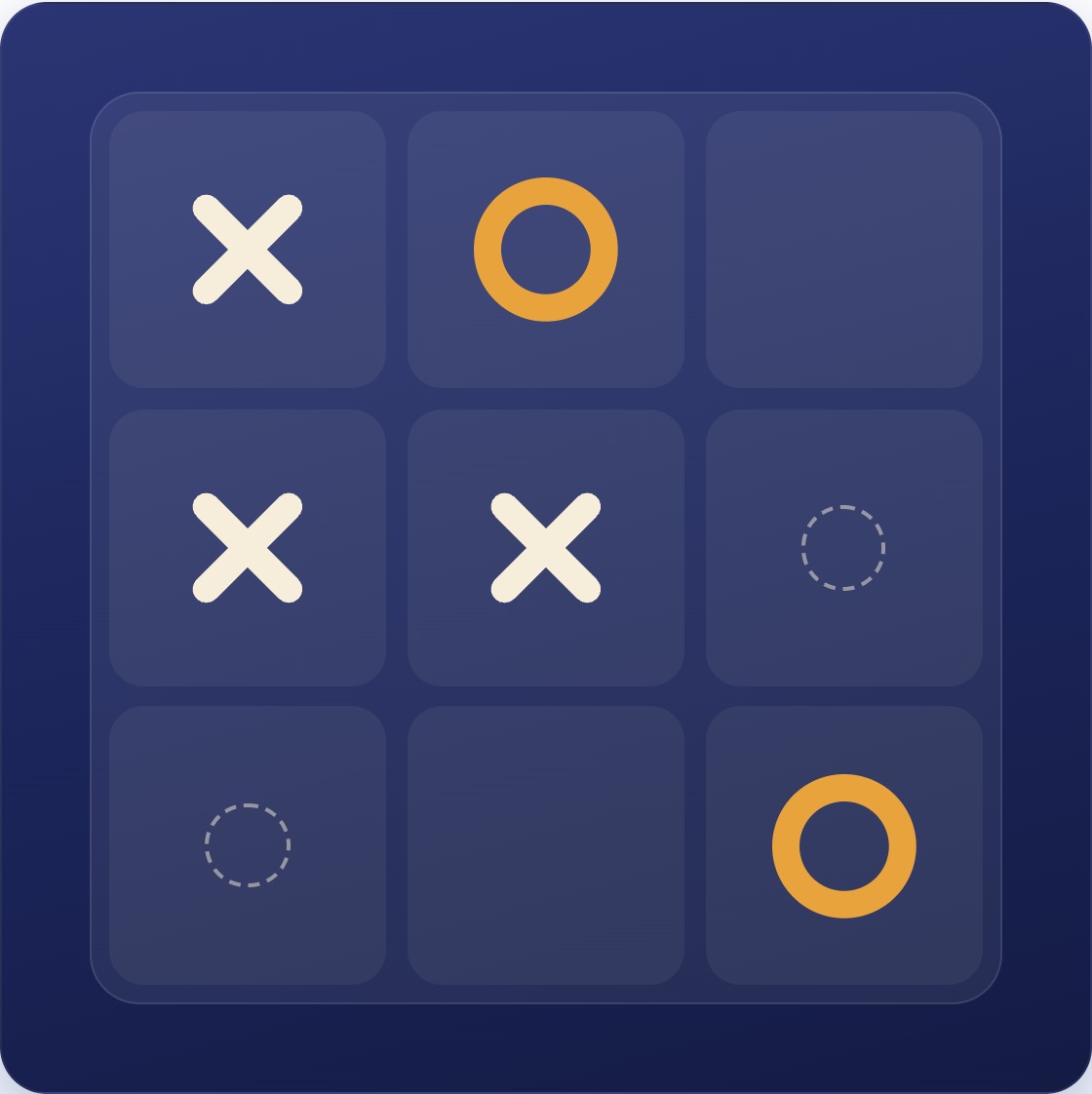
The best defence is to stop a fork before it exists. Here is the classic trap: X opens in a corner, O correctly takes the centre, and X takes the opposite corner. X now threatens to fork from either of the two empty corners, and O can't cover both.
O's answer is to attack. A move on an edge makes a threat that X has to block, and X's block makes at most one threat — so O can keep blocking all the way to a draw. A corner looks natural but loses: it makes a threat too, but X blocks it on the last free corner, and that block creates two threats at once.
X holds opposite corners, so O must play one of the ringed edge squares — a corner here loses.