10 Practical Othello Tips for Beginners
10 Practical Othello Tips for Beginners
The rules of Othello take a minute to learn. The habits that separate winning players from losing ones take longer — but they are learnable. These ten tips are practical and move-by-move. Each one gives you something concrete to check before placing a disc.
1. Scan Every Legal Move Before You Choose
The most common beginner mistake is playing the first reasonable-looking move. Take a moment to identify every legal square before committing to one.
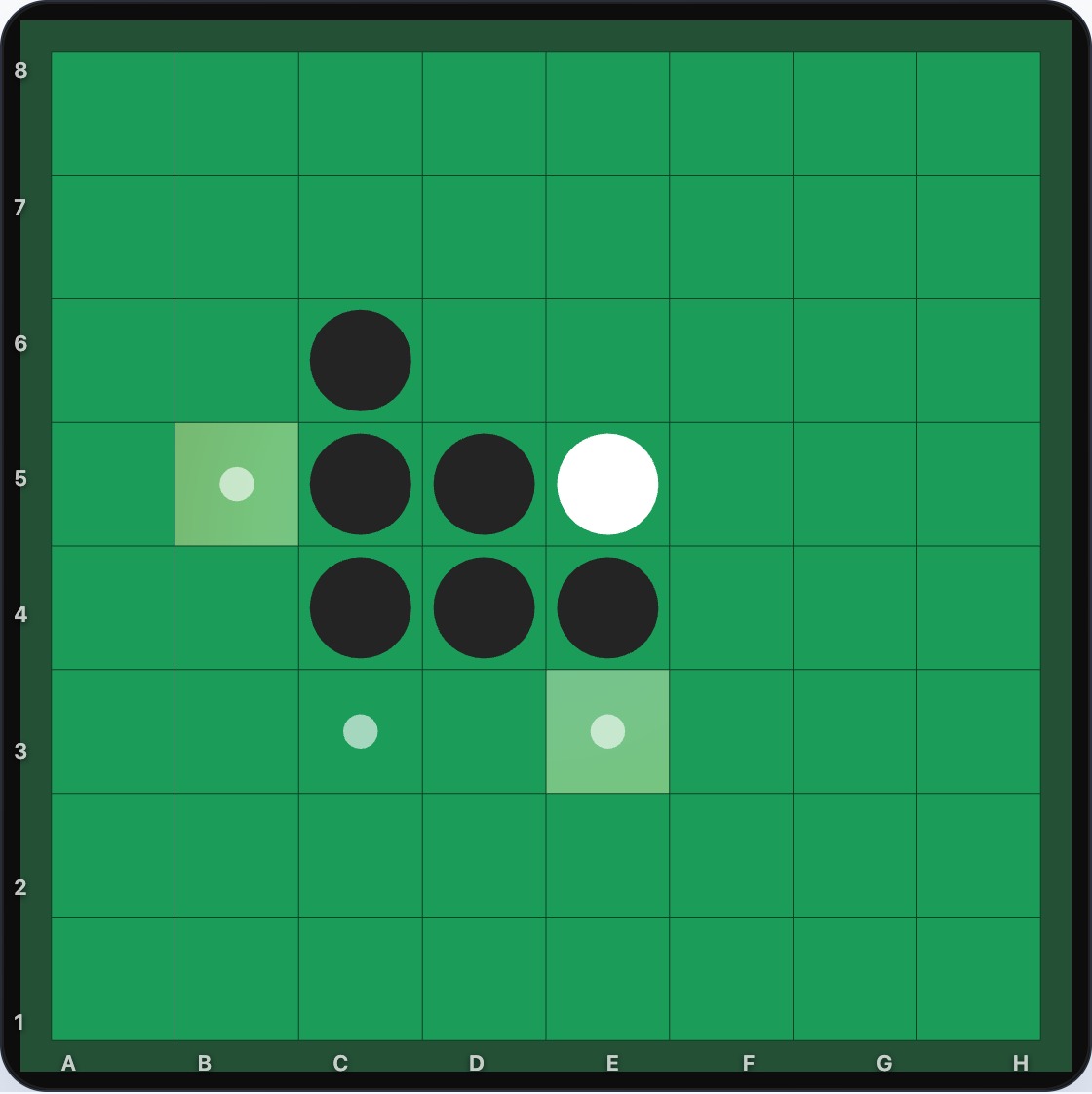
White has three legal moves. E3 develops the centre and avoids edge weakness. B5 looks active but pushes White toward the edge with little support. Scanning all three options takes seconds — skipping that step costs games.
Seeing the full set of legal moves is the foundation of every other tip here. If you never scan, you cannot compare.
2. Count Your Opponent's Replies After Your Move
A move is often bad not because of what it does now, but because of what it allows next.
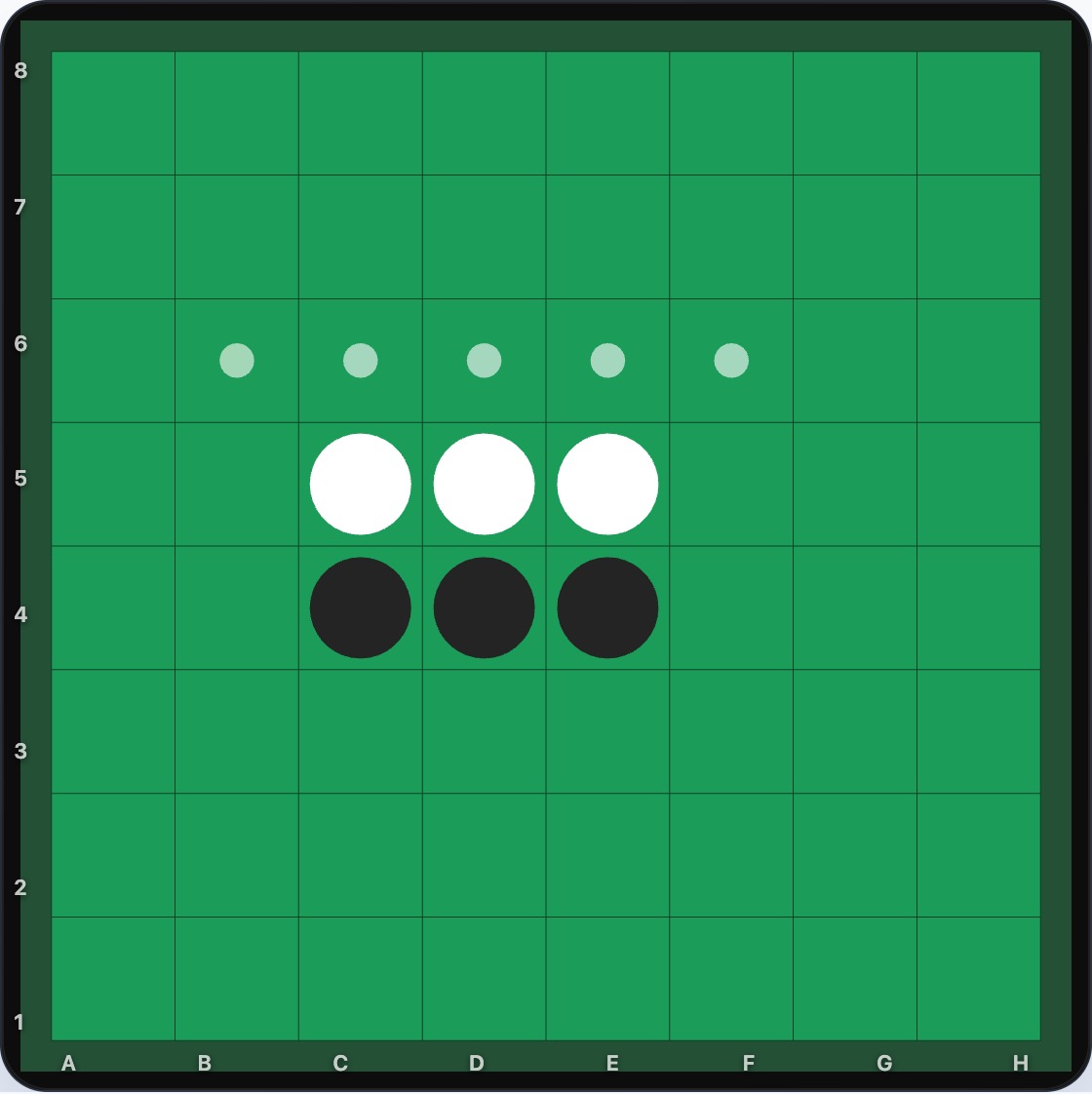
After C4 and C5, Black has five legal replies — B6, C6, D6, E6, and F6 — all spread across the sixth rank. That is a wide set of answers for Black to choose from. Before committing to C5, White should ask whether a different move would leave Black with fewer or weaker options. Fewer opponent replies means less counterplay.
Before finalising a move, mentally play it out one step. If your opponent suddenly has six good answers, reconsider.
3. Do Not Grab the Biggest Flip Automatically
A move that flips three discs can be weaker than one that flips one.
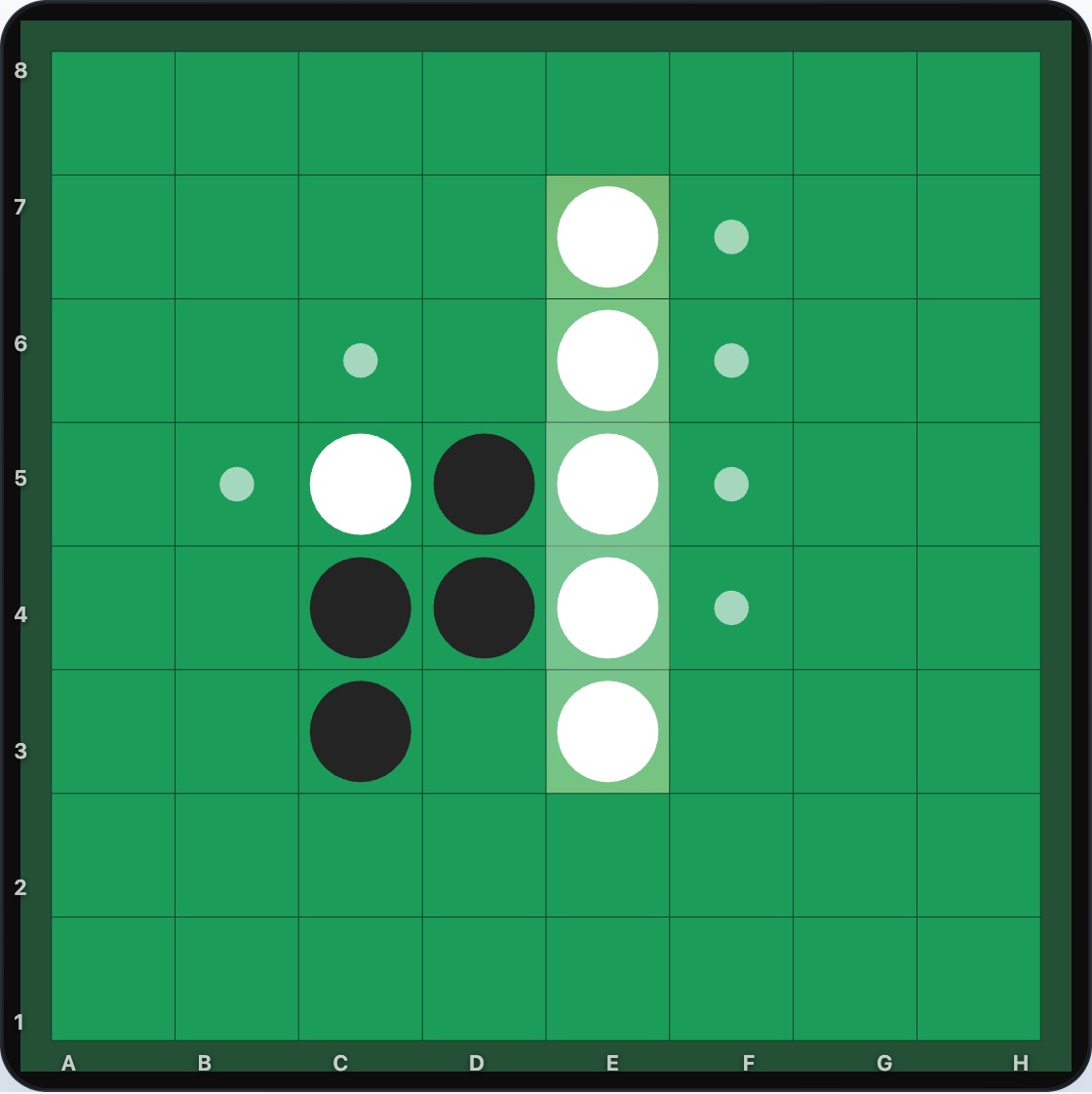
White just played E7, sweeping the entire E-column and flipping three discs at once. The highlighted column (E3 through E7) looks dominant — but Black now has six legal replies, four of them on the F-file hitting that same chain directly. The alternative, F5, flips two discs in the centre and gives Black only three replies. The "smaller" move is stronger.
Count flips as one factor among several — not as the goal.
4. If a Move Hands Your Opponent a Corner Next Turn, Reject It Immediately
This is the fastest filter you can apply. Before playing any move, ask: does this let my opponent take a corner on their very next move?
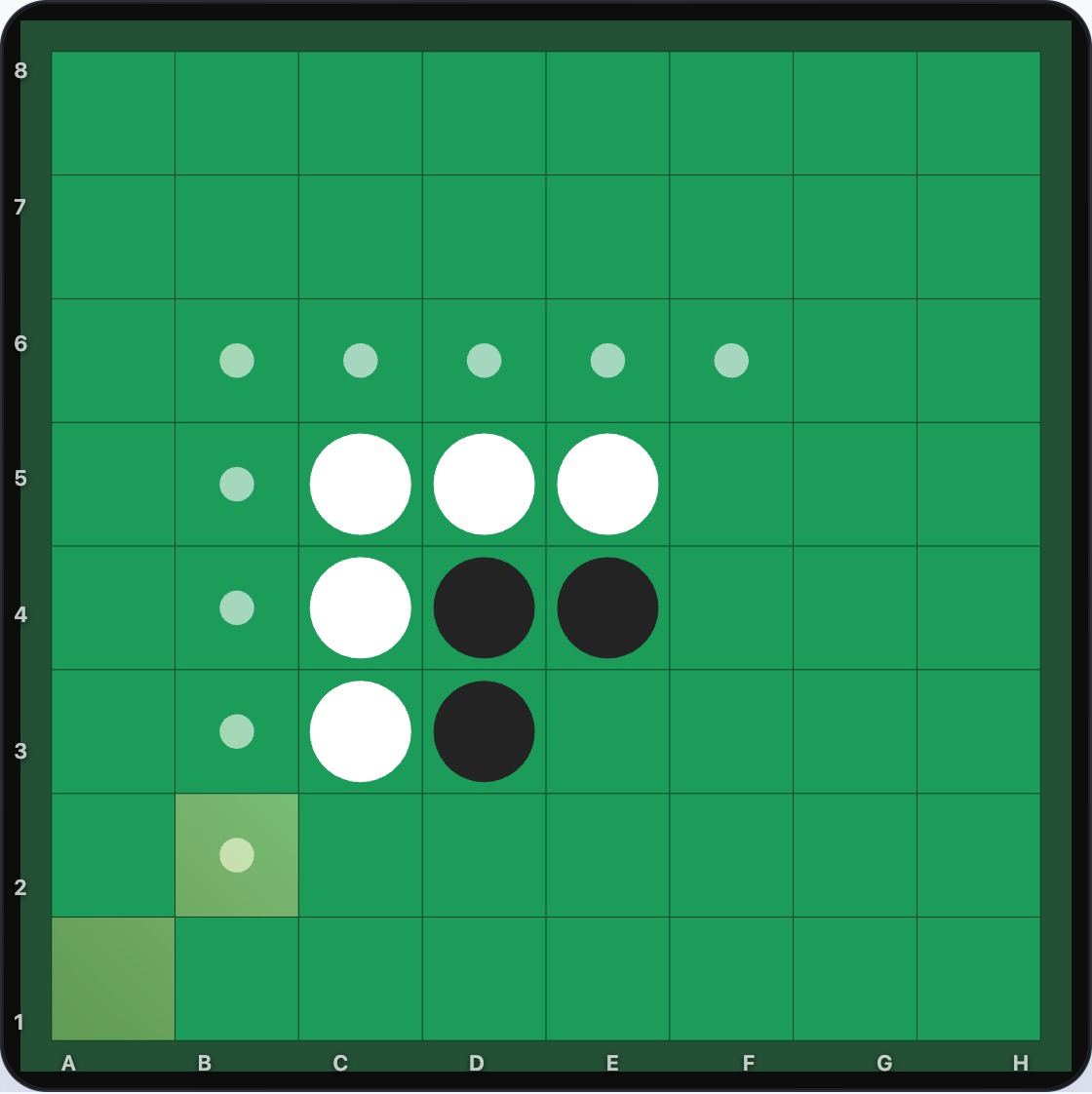
Black has nine legal moves. B2 and A1 are highlighted. B2 looks tempting — it sits right next to White's pieces and flips a disc. But playing B2 gives White a straight diagonal line through B2 to corner A1 on their very next turn. Eight of Black's nine options keep the corner safe. Apply this check to every move: if your square is diagonally adjacent to a corner, ask whether your opponent takes it next.
This one check eliminates the most common tactical blunder in beginner games.
5. Look for Moves That Funnel Your Opponent Into One Area
A well-placed disc can confine all of your opponent's legal replies to a single edge or corner of the board.
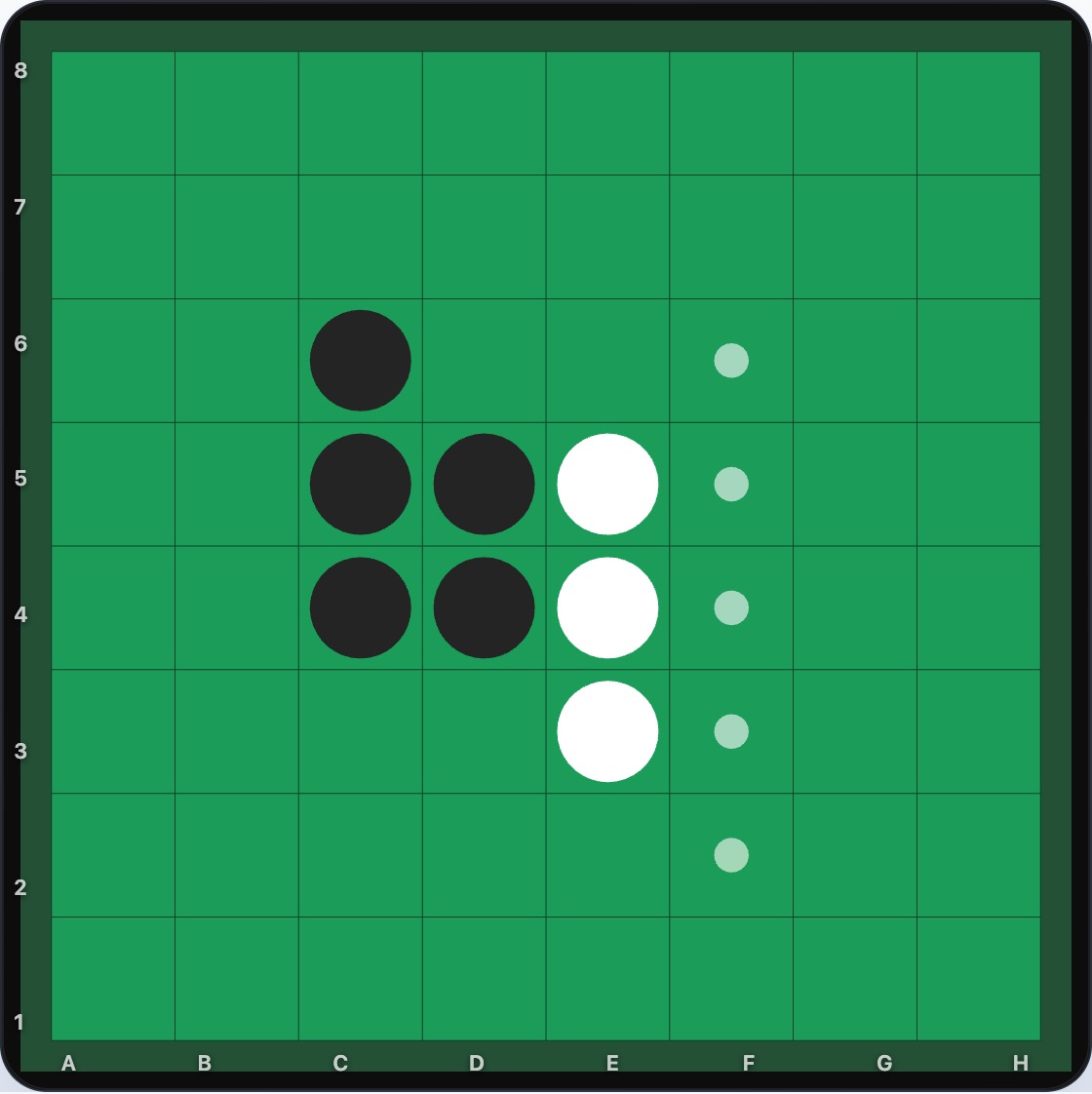
White's E3 limits Black to five replies — every single one on the F-column (F2, F3, F4, F5, and F6). Black's entire development is squeezed into a single vertical strip on the right side of the board. White can continue building across the rest of the board while Black is confined to one file.
When you find a move that clusters your opponent's replies, it is usually worth considering even if the immediate disc flip looks modest.
6. When You Own a Corner, Extend Along the Edge Carefully
Capturing a corner is a strong moment — but the follow-up edge move often decides whether the advantage grows or stalls.
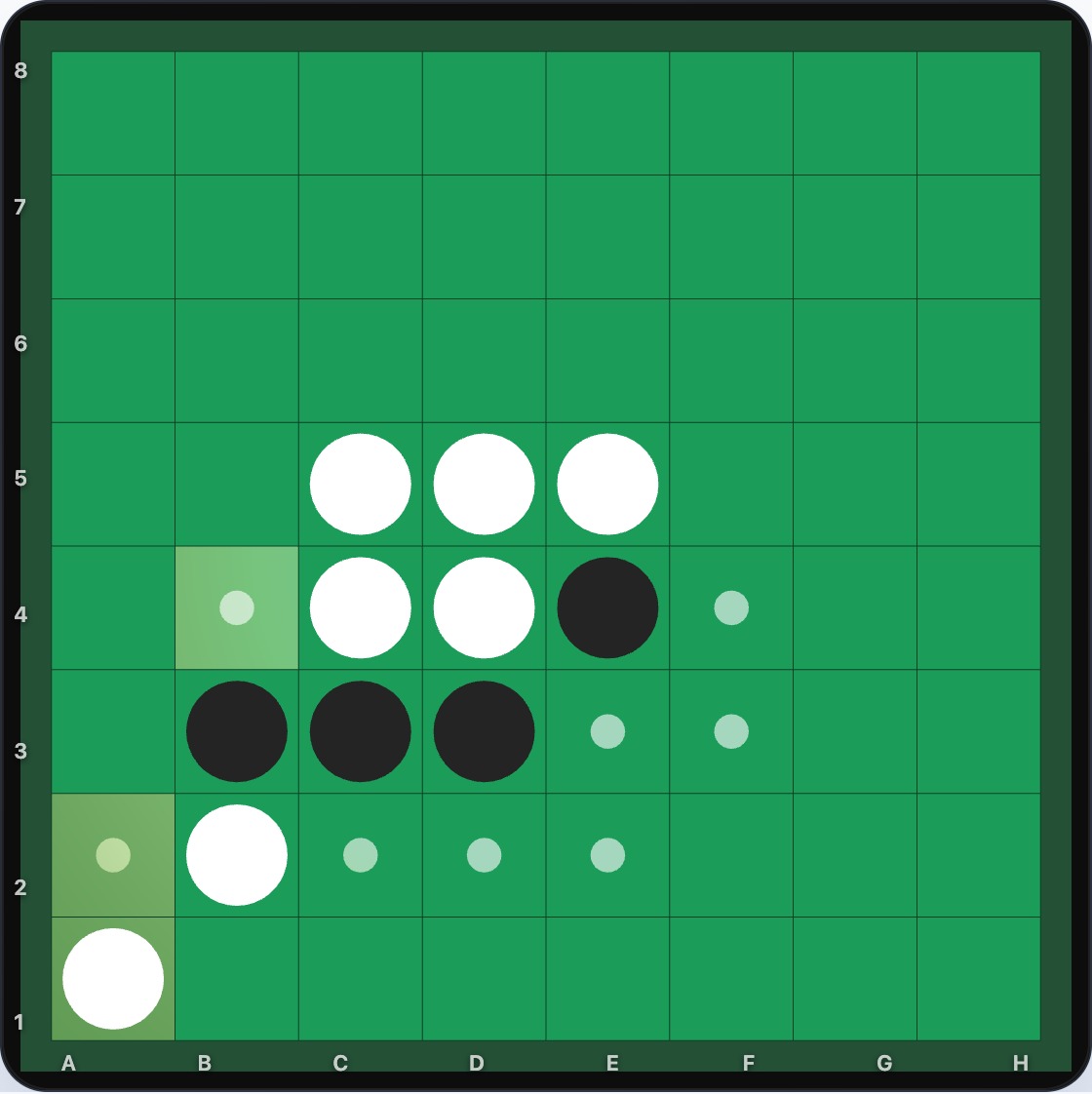
White owns corner A1. A2 is highlighted as the safe edge extension — it forms an unbroken chain with A1 along the A-column that cannot be flipped as long as the corner holds. B4 is also a legal move and flips more discs, but it is an interior square with exposed faces. Build from your corner before branching inward.
After every corner capture, pause before extending. Ask which edge square anchors the longest unbroken chain — not just which move flips the most discs.
7. Watch for Moves That Leave You With No Good Next Turn
A move can be perfectly legal and still strand you on your following turn.
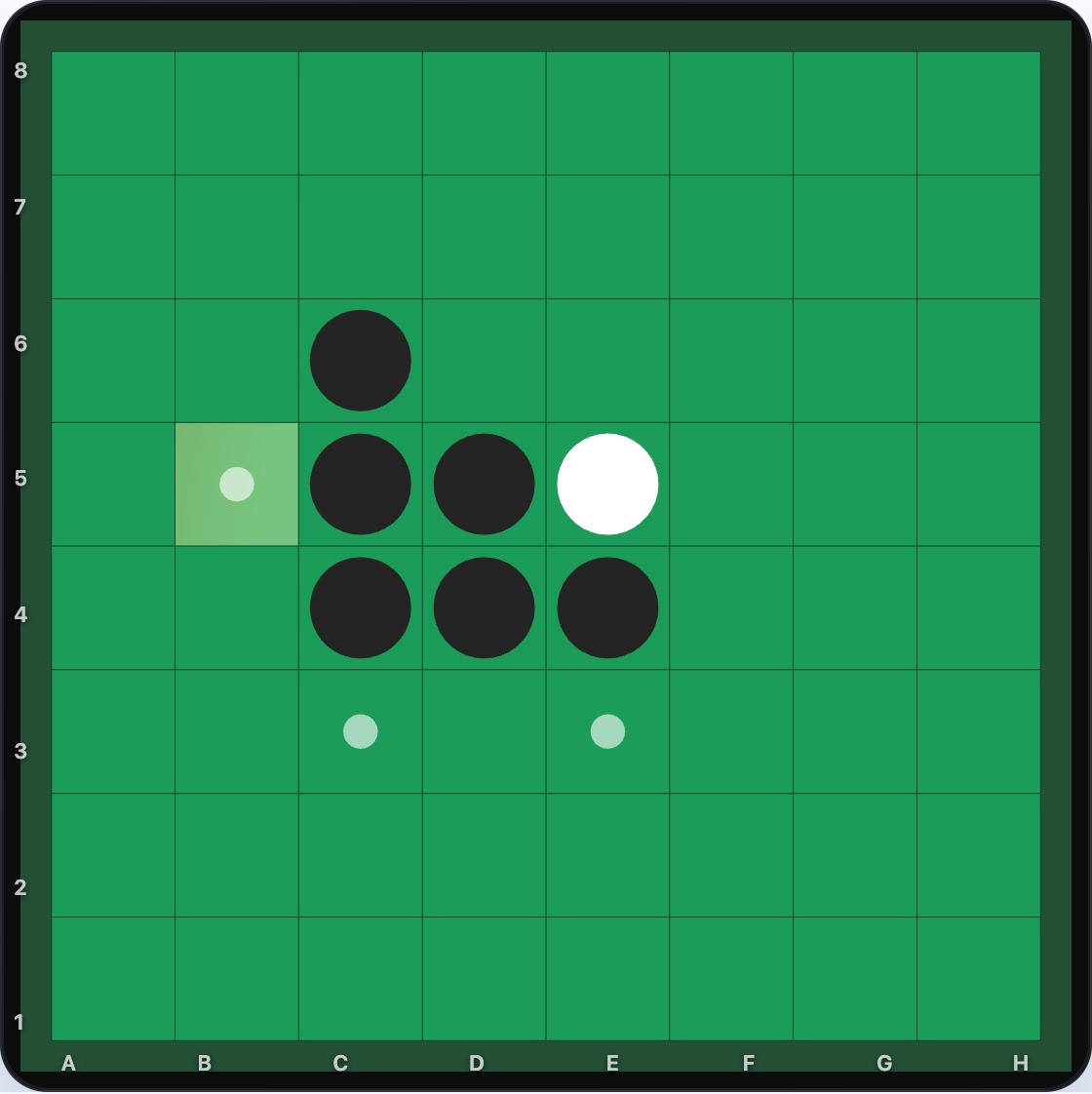
White has three legal moves. B5 is tempting because it reaches an active part of the board, but after B5, White's next turn options are weak — the resulting position gives Black strong central replies and leaves White without a clear follow-up. E3 is harder to see but leads to better continuations two moves ahead.
Always think one half-move further. If a move leads somewhere good but leaves you struggling next time, it may not be the right choice.
8. Do Not Panic If You Are Behind in Discs in the Mid-Game
A position where you trail by five discs in the mid-game is not necessarily losing. The right move might still be the positionally quiet one.
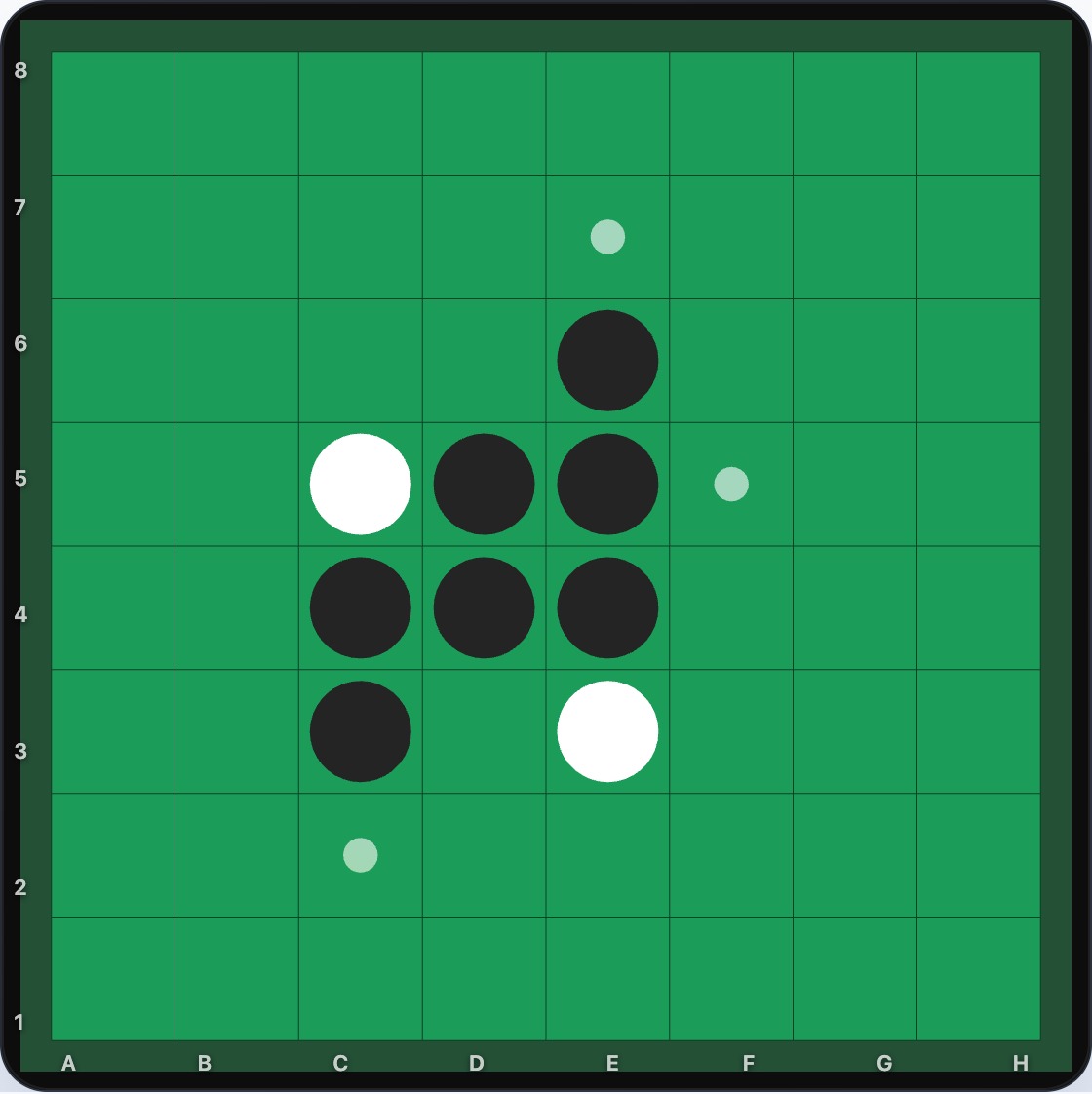
Black leads 7–2. But every Black disc is an exposed interior piece with multiple faces open for flipping. After White plays C2, the score immediately equalises at 5–5. A calm, positional White move is correct here even though the board looks like a Black advantage.
Disc count in the mid-game is an illusion. Corners, stability, and mobility are what matter.
9. In the Endgame, Count Empty Squares and Work Out the Sequence
When eight to ten empty squares remain, broad strategy gives way to precise calculation. Move order — not principle — decides the outcome.
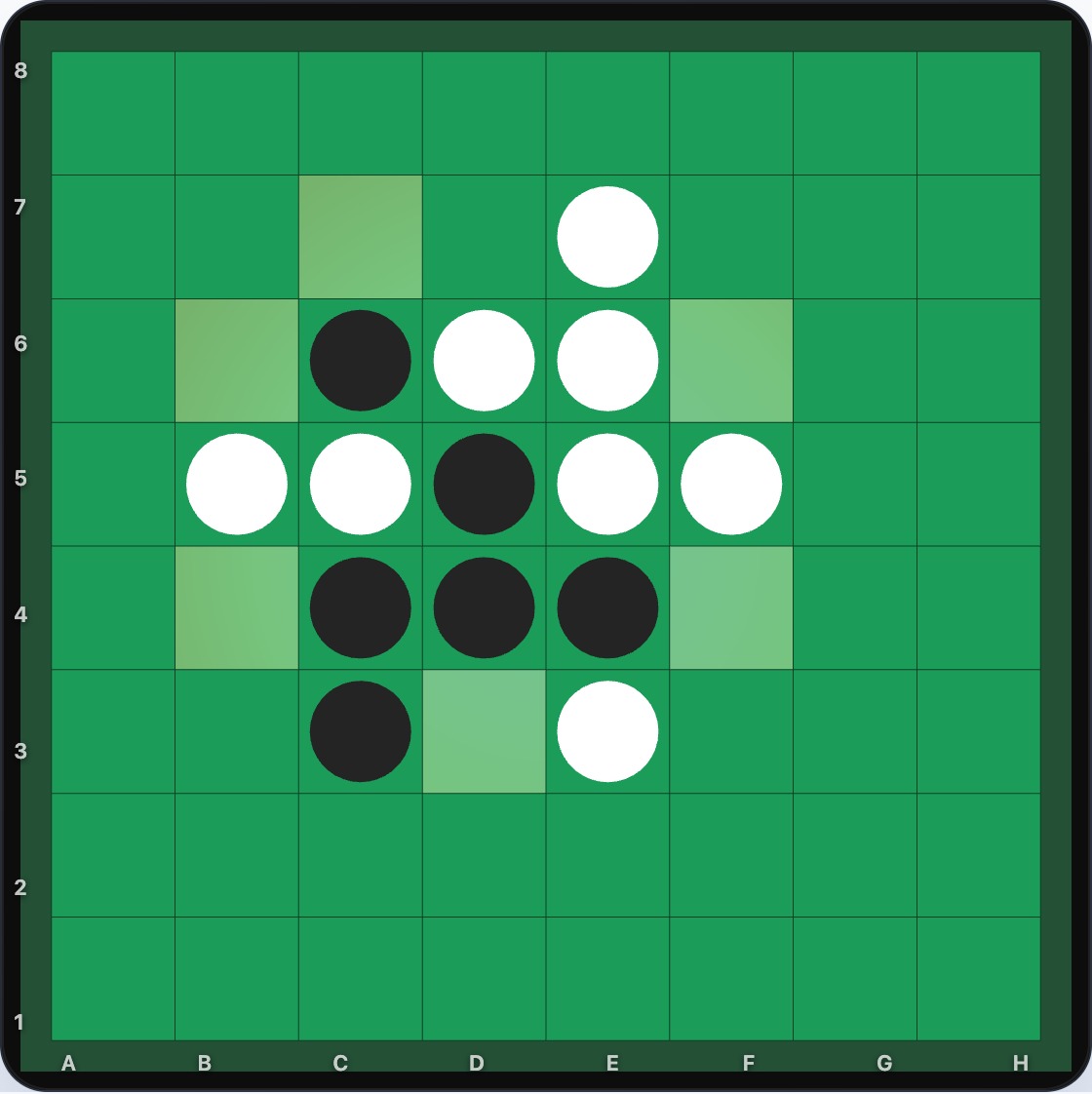
A mid-game position with six squares highlighted as the likely remaining empties. At this stage, the question is not "what is the best strategic move" but "which sequence of fills produces the most discs." Work through the options concretely — this is calculation, not strategy.
Get into the habit of counting and labelling the empty squares whenever the board starts to fill. The player who works out the sequence first gains a decisive edge.
10. If You Can Force a Pass, Calculate It Carefully
A forced pass gives you two turns in a row. It is one of the most powerful tempo swings in Othello and often decides close games.
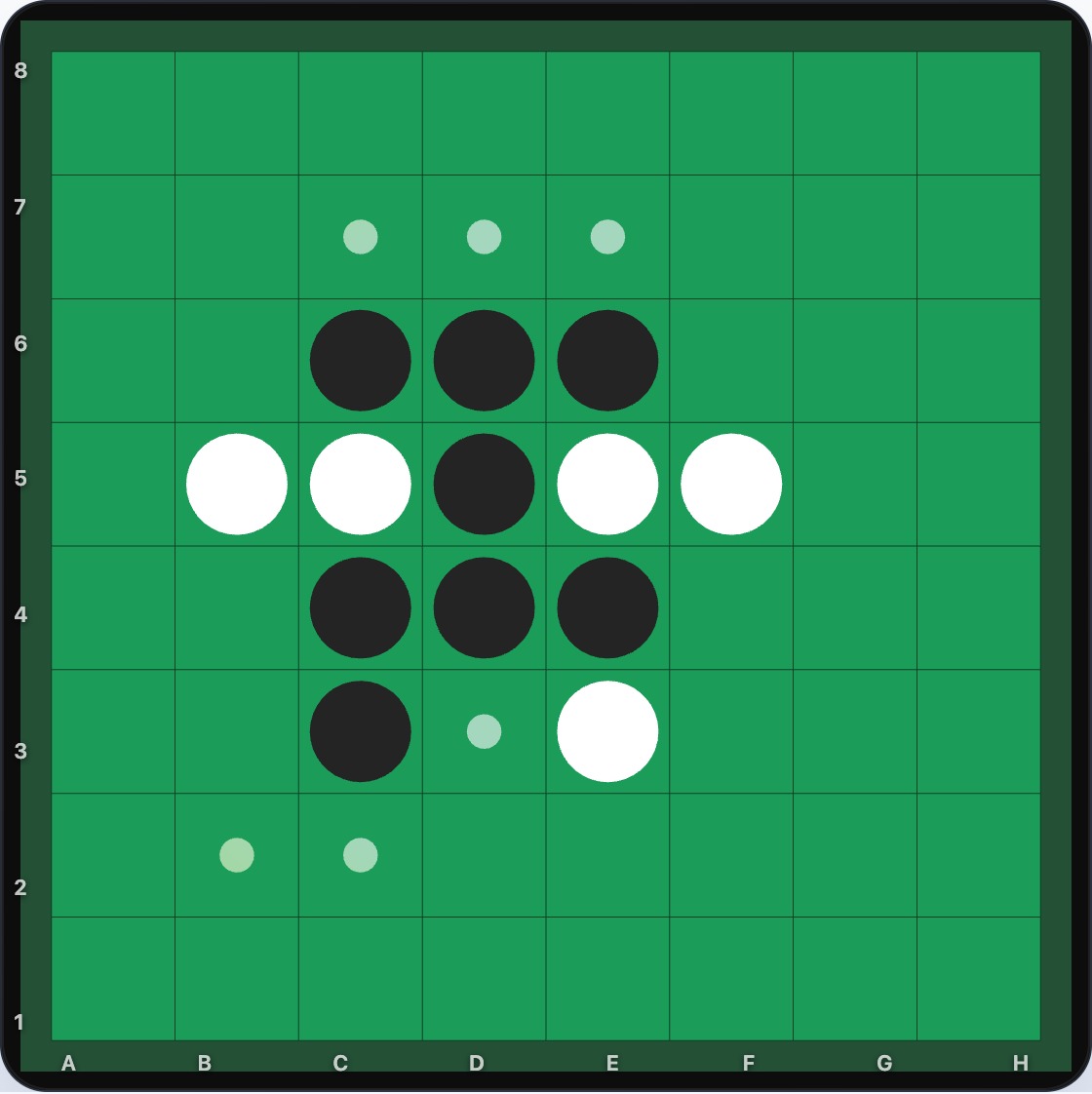
White currently has six legal moves — spread across two clusters. In a real endgame, you calculate whether a precisely timed move can eliminate both clusters at once, leaving White with zero legal plays. A player with no legal move must pass their turn, giving you two consecutive moves.
Forced passes are easy to miss in casual play and devastating when they land. Train yourself to ask — after this move, does my opponent still have somewhere to go?
Put the Tips Together
None of these tips works in isolation. The strongest Othello players combine them: they scan all moves, count opponent replies, reject corner giveaways, think one move ahead, and stay calm when the disc count looks bad.
The best way to build these habits is through practice. Play Othello on Playboard — the computer opponent gives you a patient testing ground for each of these ideas at your own pace, with no sign-up needed.
Frequently Asked Questions
- What is the single most useful habit to build in Othello?
- Scanning every legal move before choosing. Most beginners grab the first decent-looking option they see. Spending five extra seconds checking all alternatives often reveals a much stronger move with fewer drawbacks.
- How do I stop handing corners to my opponent?
- Before committing to any move, ask yourself — can my opponent reach a corner on their very next turn if I play here? If yes, reject the move immediately. This single filter eliminates most tactical blunders in the first half of the game.
- Why is a big disc flip sometimes a bad move?
- A move that flips many discs often exposes those discs for immediate recapture. Each flipped disc becomes a new target. A quieter move that limits your opponent's replies is usually stronger than chasing the largest flip.
- What does it mean to force your opponent into one area of the board?
- It means playing so that all your opponent's legal replies are clustered in a small region. When their choices are confined to one corner or edge, they cannot develop the board freely. One well-chosen move early on can funnel the entire game into a zone you control.
- When should I count empty squares in the endgame?
- Once roughly eight to ten empty squares remain, move order becomes critical. Work out the exact sequence of fills. The player who dictates that order — by forcing the opponent to fill certain squares first — usually ends up with more discs.
- What is a forced pass in Othello and why does it matter?
- A forced pass happens when a player has no legal move on their turn and must skip it. This gives the other player two consecutive turns. A single position that forces a pass can flip a losing game into a win, so it is worth calculating when you see the opportunity.